

What Was the Reality of Banishment to an Island, the Second-Heaviest Punishment After Death?
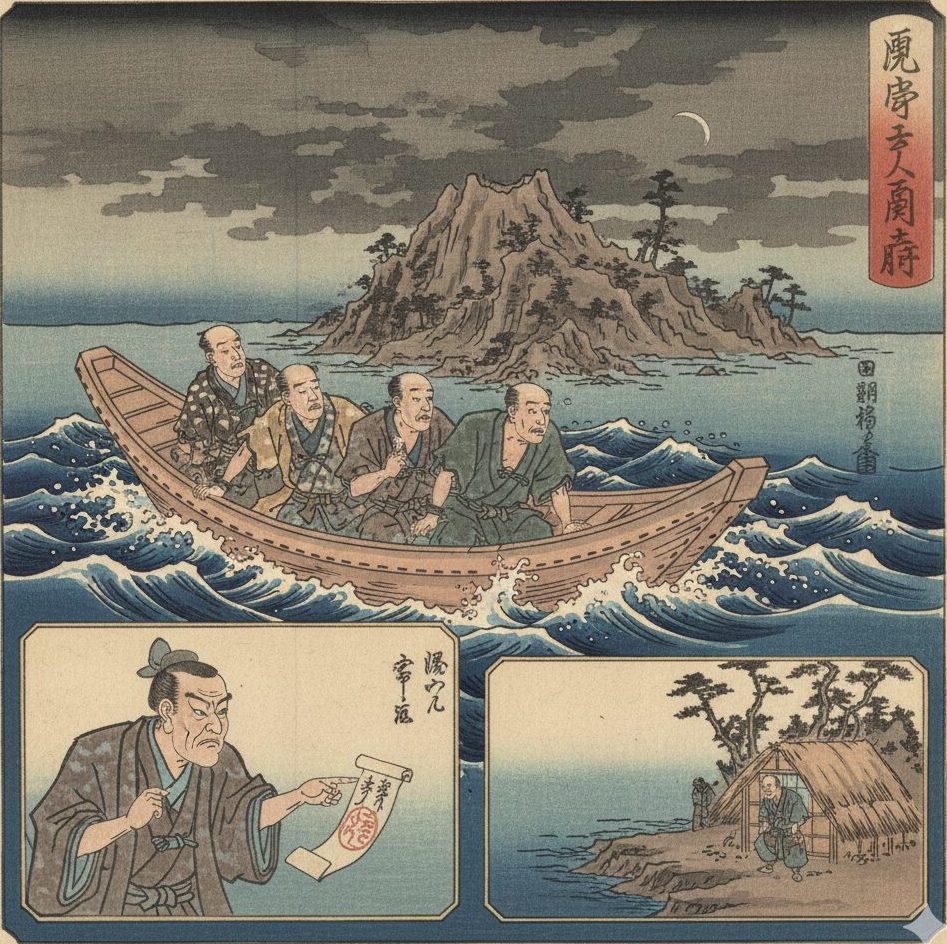
“Banishment to an island”—a term often heard in period dramas set in the Edo period.
Formally called “rukei” (流刑), it was considered the second-heaviest punishment in the penal system of the time, following only the death penalty.
From a modern perspective, one might naively imagine something like “retiring to a southern island?” but the reality was far from so pleasant.
Leaving Edo meant losing one’s family registry, severing ties with relatives, and literally “dying socially.”
We delve into the harsh survival realities of Edo-period island exile—a topic often misunderstood despite familiarity.
Where Were They Sent? Destinations and the One-Way Journey
Exile destinations were strictly determined by the severity of the crime and the convict’s social status.
Main Exile Destinations (Izu Seven Islands and Others)
Criminals from Edo were primarily sent to the “Izu Seven Islands.”
Hachijōjima, Miyakejima, Niijima: “Remote Islands” (Ontō) for those convicted of serious crimes.
Ōshima, Hachijō-kōjima: The next tier of destinations.
Sado, Oki, Goto: Hubs for criminals from western and northern Japan.
Farewells Called “Oidashi”
Upon departure for the islands, criminals were escorted to embarkation points like Senju or Fukagawa.
Here they bid their relatives a final farewell, knowing that once they crossed to the islands, they could never set foot on the mainland again.
The sea voyage was perilous.
Crossing the rough waves of the Kuroshio Current was no easy feat, and shipwrecks claiming lives before reaching the islands were not uncommon. It was truly a one-way ticket with no return.
Despair or Freedom? Survival Through Self-Sufficiency on the Islands
What awaited the exiles upon arrival was not generous protection from the shogunate… but complete abandonment.
1. No work, no food
The shogunate provided only a meager supply of rice for the first few months.
After that, they had to earn their keep by cultivating fields or assisting with fishing.
Volcanic islands like Hachijō-jima were unsuitable for rice cultivation, so their staple foods were sweet potatoes and taro.
It was a constant battle against hunger.
2. Culture Brought by the Exiles
Yet the exiles weren’t merely consumed by despair.
Among those sent from Edo were scholars, painters, and physicians.
Education: Teaching the island children to read and write.
Techniques: Passing on sake brewing and weaving skills (contributing to the development of Kihachijo textiles).
Medicine: Spreading knowledge of medicinal herbs.
Thus, Edo’s advanced culture blended with the island’s unique traditions, sometimes giving birth to new industries.
3. The Bittersweet System of “Local Wives”
In reality, while ostensibly forbidden, exiles forming families with island women was effectively tolerated.
These women were called “exile wives” (runin-zuma).
Amidst the isolation of island life, they sought mental peace by building new families.
Miraculous Returns: “Pardons” and Memories Etched in History
While most spent their entire lives on the islands, a rare chance to return to Edo existed.
This was called “shamen” (pardon).
Granted during shogunal succession or celebratory events, exiles who received this pardon to return to Edo were called “shamen-bana” (pardon flowers), and the islanders gave them grand send-offs.
However, even upon returning, it is said their lives were filled with hardship—families gone, or finding themselves in a state akin to Urashima Taro, having lost all connection to their former lives.
Exile in the Edo period was not mere isolation.
It was the ultimate human drama, where “despairing loneliness” and “rebirth in a new land” existed side by side.
The everyday inconveniences we feel today might have been the “free daily life” those exiles longed for with desperate yearning.