

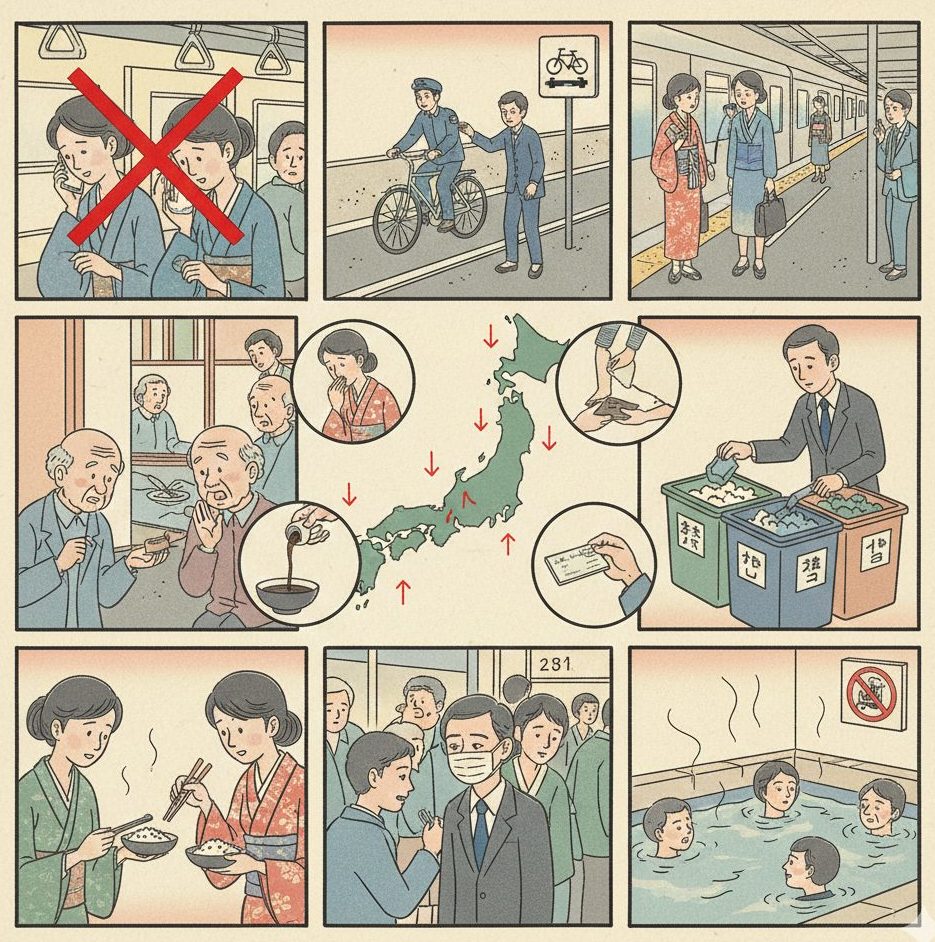
Japan is full of rules and social norms that might feel surprising or overly strict — especially to travelers and newcomers. From traffic laws to waste disposal, from public behavior to simple daily manners — many of these rules are shaped by decades (even centuries) of social habits, legal regulations, and cultural values like respect for others and community harmony.
we present 10 rules and manners commonly observed in Japan today that might seem peculiar from the outside. Whether you’re visiting Japan for the first time, living here, or just curious — knowing these can help you navigate daily life smoothly and avoid unintended trouble.

1. Bicycles Are “Vehicles” — Strict Traffic Rules Apply
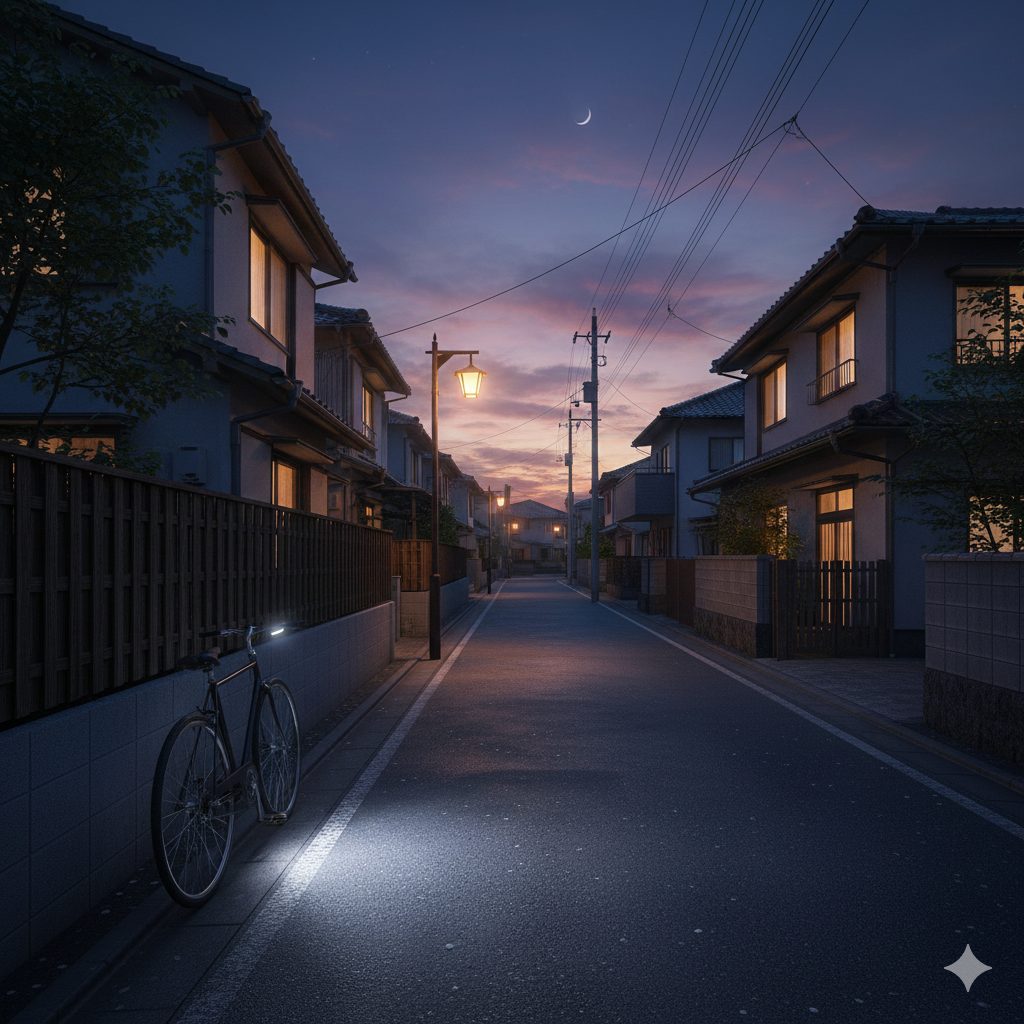
- In Japan, bicycles are treated as “light vehicles” under the traffic laws.
- At night, it is mandatory to turn on a headlight at the front (and ideally a rear light or reflector) — riding without lights can lead to being stopped by police.
- Riding under the influence of alcohol is strictly prohibited. Even cyclists are subject to the same rules as drivers.
- You should ride on the left side of the road, obey traffic signals, and yield to pedestrians when on sidewalks (which are only allowed in certain cases).
Tips:
- Always check that your bike’s lights are working — especially in the evening or at night.
- If you drink, take public transportation or walk — not your bike.
- Use sidewalks only when officially designated, and always give pedestrians the right-of-way.
2. Garbage Separation Is Serious — You Must Sort and Dispose Properly

- Most municipalities require residents to separate their waste into categories like burnable (combustible), non-burnable (incombustible), plastics or “resource/good” waste, and sometimes a separate “recyclables” category.
- For example, in one Tokyo ward, residents must rinse containers lightly before recycling; soiled items may need to go to burnable trash.
- Many cities require you to use designated garbage bags (paid or specific-colored bags); trash in unapproved bags may simply not be collected.
Tips:
- After moving to a new area, check the local municipality’s garbage rules — types of waste, bag color/size, and collection schedules vary widely.
- Clean (or at least rinse) recyclables; contaminated items may be rejected.
- Use the right bag type — failing to do so may mean your trash won’t be picked up.
3. Public Smoking & “Walk-and-Smoke” Are Often Banned

- Many municipalities in Japan restrict smoking in public areas such as city sidewalks, near train stations, or in parks. Walking while smoking (so-called “walk-and-smoke”) is particularly frowned upon and often fined.
- Instead, designated “smoking areas” or “smoking zones” are usually set up around busy public spaces.
Tips:
- If you smoke, always look for official smoking zones or stands.
- Carry a portable ashtray if you’re unsure.
- Avoid walking or smoking near crowds; clean up cigarette butts properly.
4. Politeness and Quiet in Public Transport — Avoid Loud Talk & Noise
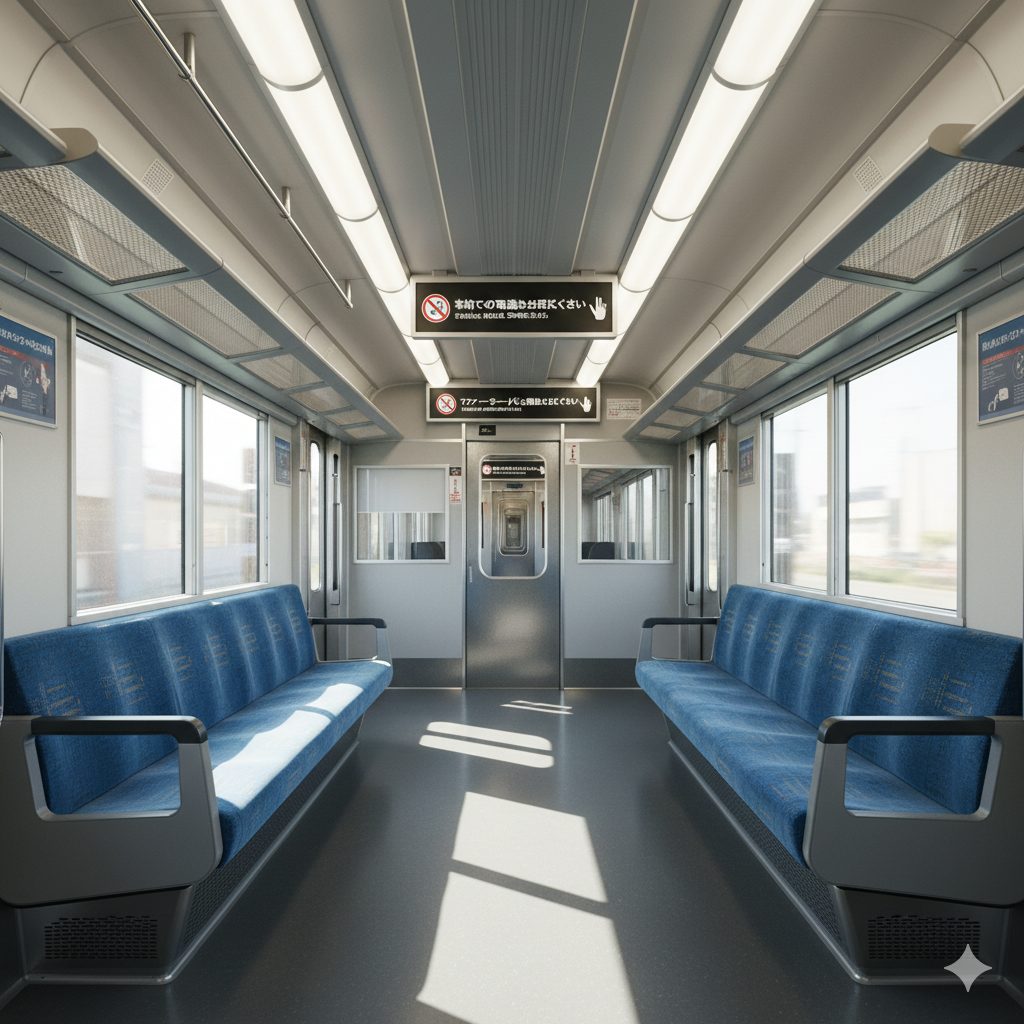
- On trains, subways, and buses, loud talking, phone calls, or playing music without headphones is generally considered rude — even if not explicitly illegal.
- People usually speak softly; etiquette favors silence or at least discretion.
Tips:
- Use silent or vibrate mode on your phone; avoid loud calls.
- Keep your voice low, especially in crowded or quiet compartments.
- Be mindful of others’ comfort, especially during rush hours.
5. Courtesy in Shared/Residential Spaces — Respect for Neighbors
- In apartment buildings or residential neighborhoods, rules about noise (especially late at night), cleanliness such as trash disposal times/locations, and general behavior are often implicitly expected.
- Actions like leaving trash outside collection hours, loud gatherings, or inconsiderate noise can easily upset neighbors.
Tips:
- Learn and follow the building’s rules (trash days, noise curfew, etc.).
- Keep shared or common areas clean and tidy.
- Be considerate about sound — even ordinary living noises can be disturbing in thin-walled buildings.
6. No Drinking & Driving (or Cycling): Strict Regulation
- Not only car drivers, but cyclists too must not ride under influence of alcohol. The law applies equally to all.
- Violations can lead to fines or penalties, and are strictly enforced.
Tips:
- If you drink, plan ahead — use public transport or taxis, never ride a bike or drive.
- Avoid offering alcohol to others who might ride or drive afterward.
7. Plastic & Recyclables Must Be Clean: Check Labels & Rinse Properly
- In many municipalities, only containers/packaging with proper recycling marks (e.g. “プラ” symbol) are accepted as resource/plastic waste. Others may need to go into burnable or non-burnable trash. (環境のミカタ株式会社)
- Contaminated items (food residue, oily packaging, etc.) are often rejected — or require extra cleaning before disposal. (荒川区公式サイト)
Tips:
- Rinse containers or packaging lightly if possible.
- Separate types correctly — plastics, combustibles, recyclables, etc.
- When in doubt, check your local city’s disposal guidelines — often available online or as printed guides.
8. Foreign Residents & Visitors Also Must Follow These Rules
- These rules and regulations apply to everyone in Japan — citizens, residents, and visitors alike. Ignorance is not accepted as an excuse.
- This includes garbage sorting, bike laws, public behavior, and more.
Tips:
- Before traveling or moving to Japan, review local rules (city or prefecture).
- Respect local customs and laws to avoid unintentional trouble.
- Use official resources or community guides (many cities publish multilingual guides) to understand regulations.
9. “Cleanliness, Order, Courtesy” Are More Than Habits — They’re Cultural Values
- The numerous rules, from waste sorting to public etiquette, reflect a cultural emphasis on community harmony, respect for neighbors, and social responsibility.
- Following these rules isn’t just about legality — it’s about living considerately with others, preserving public spaces, and valuing shared comfort and safety.
Note:
- Such values also echo traditional Japanese cultural attitudes — the idea that one’s actions affect the larger group, and that maintaining harmony requires personal discipline and mutual respect.
10. Simple Advice to Enjoy Your Stay or Life in Japan
If you’re visiting, staying, or living in Japan, keeping these in mind will help your experience go smoothly:
- Check local garbage rules right after arrival. Know what goes where, when trash is collected, and which bag to use.
- Use lights on your bike at night; avoid riding if you’ve been drinking.
- Observe public manners: quiet voices on public transport, use of smoking zones, respect neighbors in shared spaces.
- Recycle and sort properly, rinse if needed, and always use the proper bags or containers.
- When in doubt — ask or check official city/prefecture guidelines (many local governments offer multilingual instructions).
By following these, you’ll avoid common pitfalls, show respect for local norms, and enjoy a smoother, more respectful experience in Japan.