

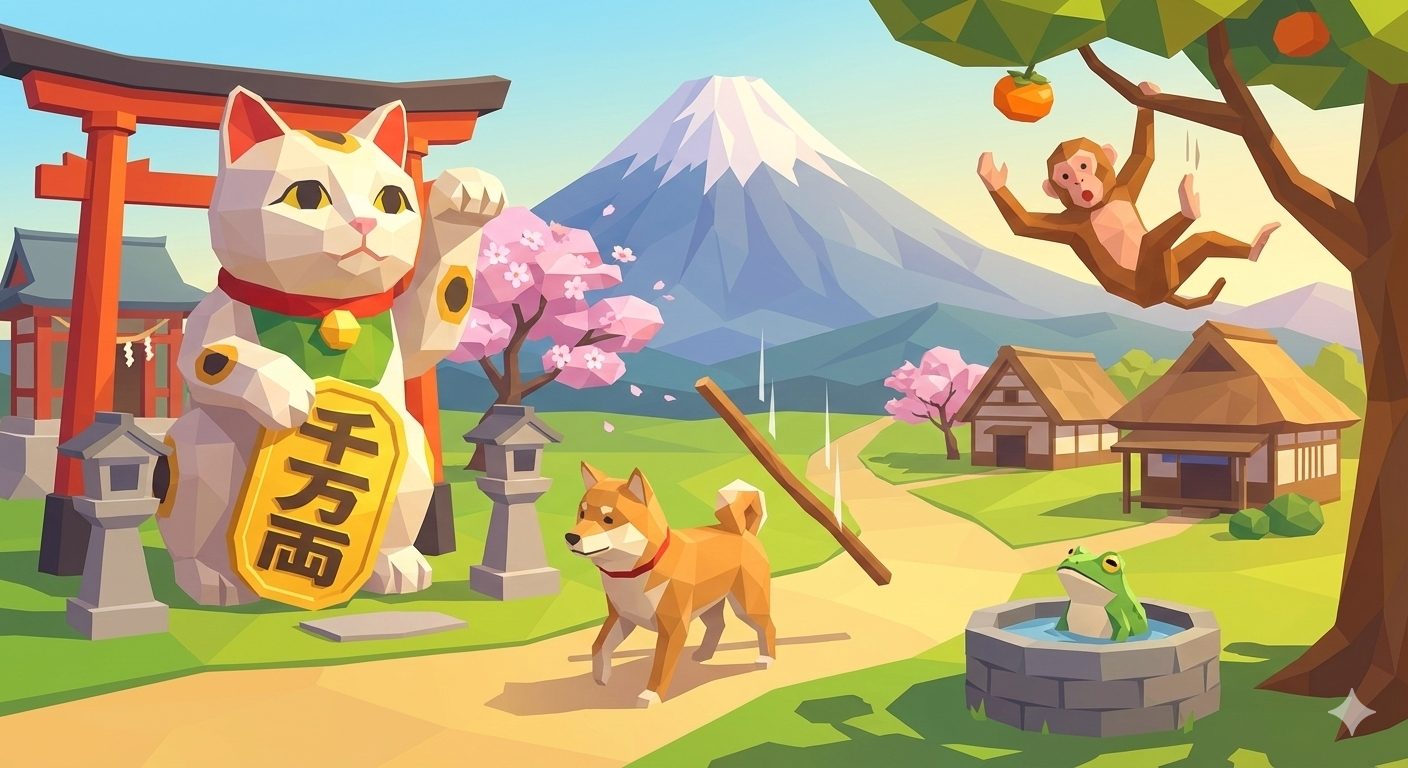
Japan has a rich tradition of proverbs (ことわざ, kotowaza) that convey wisdom, advice, and life lessons.
These sayings are widely used in daily conversations and business settings, making them essential for understanding Japanese culture and communication.
In this article, we will introduce 10 famous Japanese proverbs, explaining their meanings and how to use them in real life!
1. 猿も木から落ちる (Saru mo ki kara ochiru)
🔹 Meaning: Even experts make mistakes.
🔹 English Equivalent: “Even monkeys fall from trees.”
✅ Explanation
Monkeys are excellent climbers, but even they can fall from trees sometimes. This proverb teaches that nobody is perfect, and mistakes happen even to the best.
🔹 Example Usage
A professional gamer loses a match:
“Well, even monkeys fall from trees!”
2. 石の上にも三年 (Ishi no ue ni mo san nen)
🔹 Meaning: Patience and perseverance will lead to success.
🔹 English Equivalent: “Perseverance prevails.”
✅ Explanation
Sitting on a cold stone for three years will eventually warm it, meaning consistent effort will bring results over time.
🔹 Example Usage
A new employee struggling at work:
“Hang in there! Even a stone warms up after three years.”
3. 七転び八起き (Nana korobi ya oki)
🔹 Meaning: Never give up, no matter how many times you fail.
🔹 English Equivalent: “Fall seven times, stand up eight.”
✅ Explanation
No matter how many times you fall, always get back up and keep trying. This proverb is often used to encourage perseverance.
🔹 Example Usage
A friend failing multiple times at an exam:
“Don’t give up! Fall seven times, stand up eight!”
4. 能ある鷹は爪を隠す (Nō aru taka wa tsume o kakusu)
🔹 Meaning: Truly skilled people don’t show off.
🔹 English Equivalent: “A wise hawk hides its talons.”
✅ Explanation
A smart hawk keeps its sharp claws hidden until necessary, meaning talented people don’t boast about their skills.
🔹 Example Usage
A quiet coworker surprises everyone with their knowledge:
“A wise hawk hides its talons!”
5. 出る杭は打たれる (Deru kui wa utareru)
🔹 Meaning: People who stand out often face criticism.
🔹 English Equivalent: “The nail that sticks out gets hammered down.”
✅ Explanation
In Japan’s group-oriented culture, those who stand out too much are often criticized or pressured to conform.
🔹 Example Usage
A unique idea gets rejected at work:
“Looks like the nail that sticks out gets hammered down.”
6. 一石二鳥 (Isseki ni chō)
🔹 Meaning: Achieving two things with one action.
🔹 English Equivalent: “Kill two birds with one stone.”
✅ Explanation
This phrase describes an efficient action that brings double the benefits.
🔹 Example Usage
Studying while commuting to work:
“That’s killing two birds with one stone!”
7. 臭いものに蓋をする (Kusai mono ni futa o suru)
🔹 Meaning: Hiding a problem without solving it.
🔹 English Equivalent: “Covering up something unpleasant.”
✅ Explanation
Putting a lid on something that smells bad only hides the problem temporarily instead of fixing it.
🔹 Example Usage
A company ignoring a scandal:
“They’re just covering up the problem instead of fixing it.”
8. 馬の耳に念仏 (Uma no mimi ni nenbutsu)
🔹 Meaning: Giving advice to someone who won’t listen.
🔹 English Equivalent: “Preaching to a horse’s ear.”
✅ Explanation
A horse won’t understand Buddhist prayers, just like some people won’t listen to good advice.
🔹 Example Usage
Someone ignoring career advice:
“Giving them advice is like preaching to a horse’s ear.”
9. 口は災いの元 (Kuchi wa wazawai no moto)
🔹 Meaning: Careless words can cause trouble.
🔹 English Equivalent: “The mouth is the source of trouble.”
✅ Explanation
Speaking without thinking can lead to big problems, so be careful with your words.
🔹 Example Usage
Someone posts something controversial online:
“Be careful what you say—your mouth can be the source of trouble!”
10. 情けは人の為ならず (Nasake wa hito no tame narazu)
🔹 Meaning: Kindness will eventually come back to you.
🔹 English Equivalent: “Kindness is never wasted.”
✅ Explanation
Many people misunderstand this proverb, thinking it means “Don’t be kind to others.” However, it actually means that being kind to others will benefit you in the long run.
🔹 Example Usage
Encouraging someone to help others:
“Kindness is never wasted—it will come back to you someday.”