

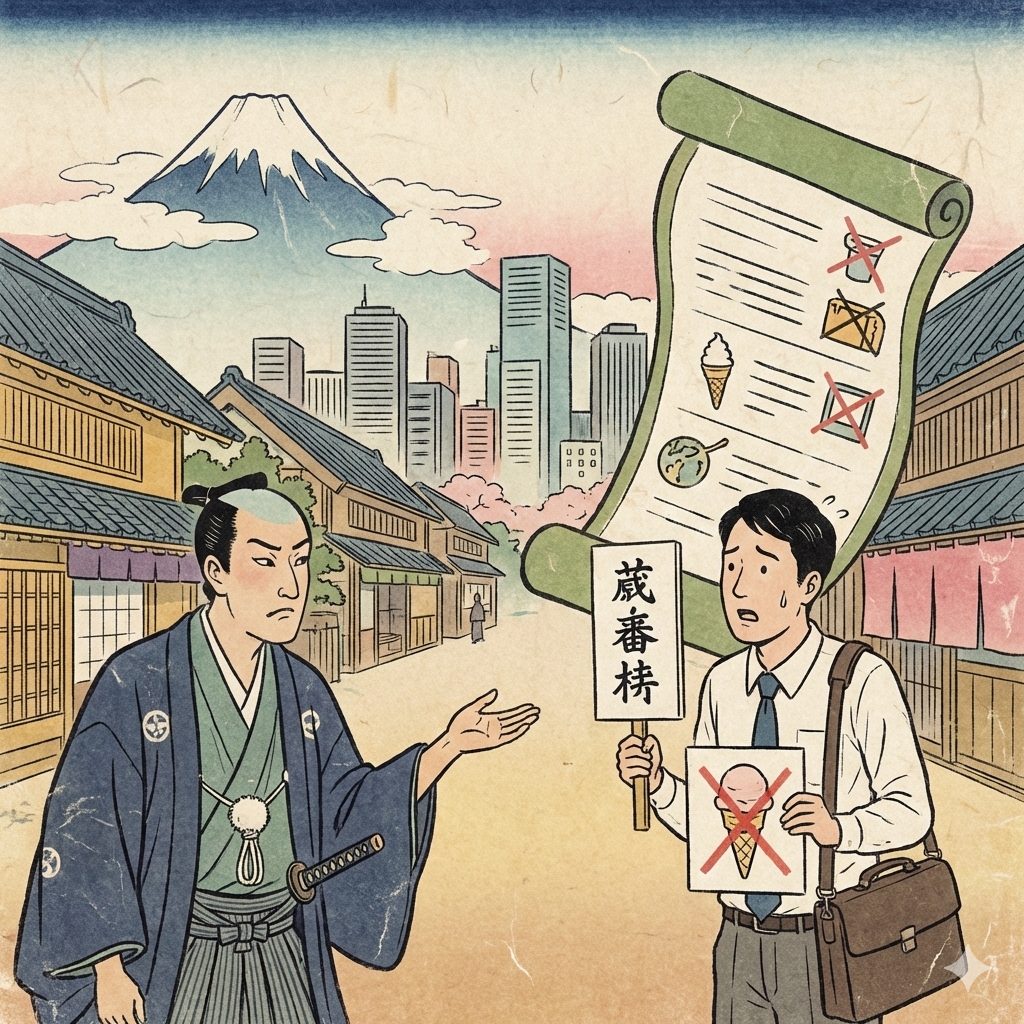
The Edo period (1603–1868) introduced many laws and rules, some of which still influence modern Japan. While some have disappeared, others have left behind unexpected traces in contemporary society. Here are ten bizarre laws and customs that originated in the Edo period and still have an impact today.
1. The “Fumie” Ban – Now a Cultural Sensitivity Towards Religious Icons
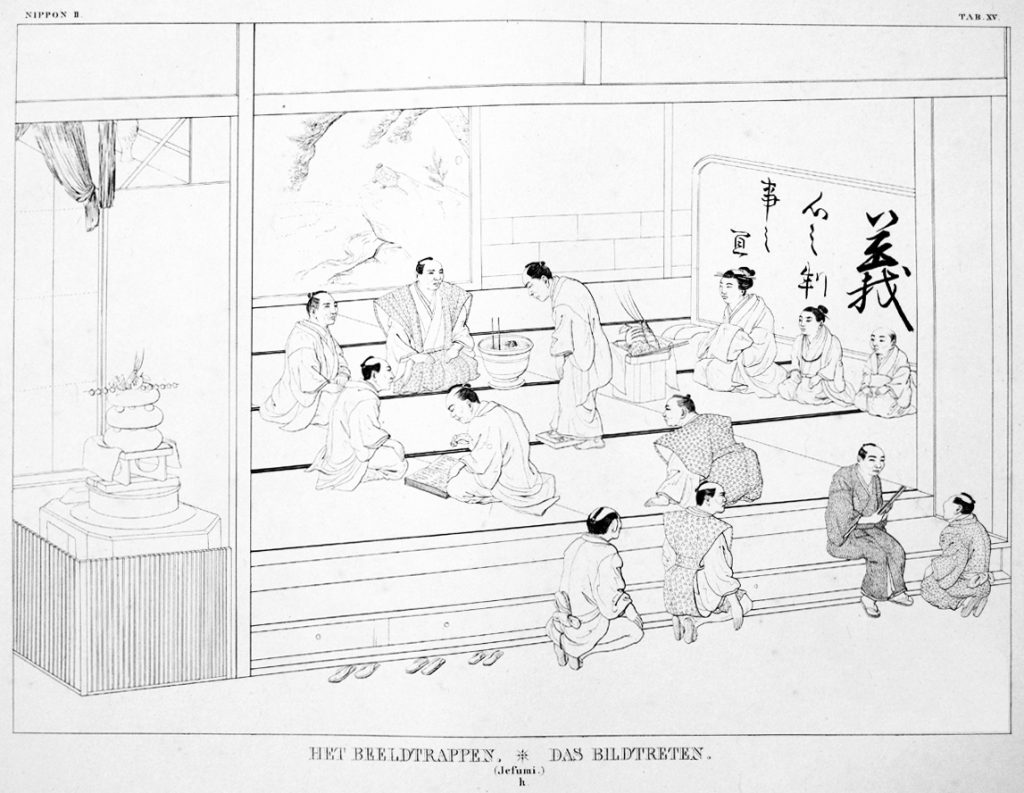
During the Edo period, authorities used “fumie” (stepping on Christian images) to identify hidden Christians. While this practice was abolished, Japan still has a cultural tendency to treat religious images and photographs with great care, avoiding stepping on or damaging them.
2. The “Luxury Ban” – Its Influence on Japan’s Uniform Culture
The Edo government repeatedly issued “luxury bans” to prevent commoners from indulging in extravagant clothing and meals. This policy of enforcing social status-appropriate attire is thought to have influenced Japan’s current school uniform and professional dress code culture.
3. The “Fire and Thief Patrol” – The Precursor to Japan’s Special Police Units
The Edo shogunate established a special force called “Hitsuke Tōzoku Aratame” to combat arson and theft. This system is considered a precursor to Japan’s modern special investigation teams like the police’s SIT (Special Investigation Team) and SAT (Special Assault Team).
4. The “Ban on Commoners Using Surnames” – Its Connection to Modern Naming Laws
During the Edo period, only samurai were allowed to have surnames, while commoners were forbidden from using them. Even today, Japan has strict naming laws, and married couples are legally required to share the same surname—a practice that originated from the Meiji era’s continuation of this rule.
5. The “Compassion for Living Beings Law” – Its Influence on Modern Animal Welfare Laws
Tokugawa Tsunayoshi, known as the “Dog Shogun,” enforced extreme animal protection laws, forbidding the mistreatment of animals. While the original laws were abolished, Japan still has relatively strict animal protection laws today, such as bans on pet euthanasia and strict penalties for animal abuse.
6. The “Night-Prostitute Crackdown” – The Origins of Modern Sex Industry Regulations
The Edo government regulated street prostitutes known as “yotaka,” restricting their activities. Modern Japanese laws on the sex industry, such as bans on street solicitation and restrictions on late-night business operations, have historical ties to these Edo-period policies.
7. “Stealing Over 10 Ryō = Death Penalty” – Its Influence on Modern Criminal Law
In the Edo period, stealing more than 10 ryō (about 400,000–500,000 yen today) was punishable by death. While such extreme penalties no longer exist, Japan still has strict distinctions between theft and robbery, with much harsher punishments for robbery—an influence that may trace back to Edo-period law.
8. The “Eta and Hinin System” – The Roots of Modern Social Discrimination
The Edo period had a strict social class system where people labeled as “eta” (outcasts) or “hinin” (non-humans) were forced into specific occupations and suffered discrimination. Though abolished in the Meiji era, remnants of this system persist in modern Japan through lingering discrimination against former buraku communities.
9. The “Temple Registration System” – The Origins of the Modern Buddhist Danka System
The Edo shogunate required all citizens to register with a Buddhist temple to prove they were not Christians. This led to the modern “danka” system, where families maintain long-standing ties with specific temples for funeral services and ancestral worship.
10. The “Alternate Attendance System” – The Possible Influence on Japan’s Business Travel Culture
During the Edo period, feudal lords were required to travel to Edo (modern Tokyo) every other year and leave their families there as hostages to ensure loyalty. Some historians believe this system contributed to Japan’s modern corporate culture, where long business trips, frequent relocations, and solo assignments (tanshin funin) remain common.
Conclusion
Many Edo-period laws and customs may seem outdated, but their effects can still be felt in Japan today. From naming laws to animal protection and even business travel culture, history continues to shape modern society in unexpected ways.
Japanese-style wabi-sabi goods and art now available!
Welcome to WABISABIMOMENTS! Discover Japanese-inspired beauty through our curated selection of home goods and apparel.
Find items to soothe your mind and body!