

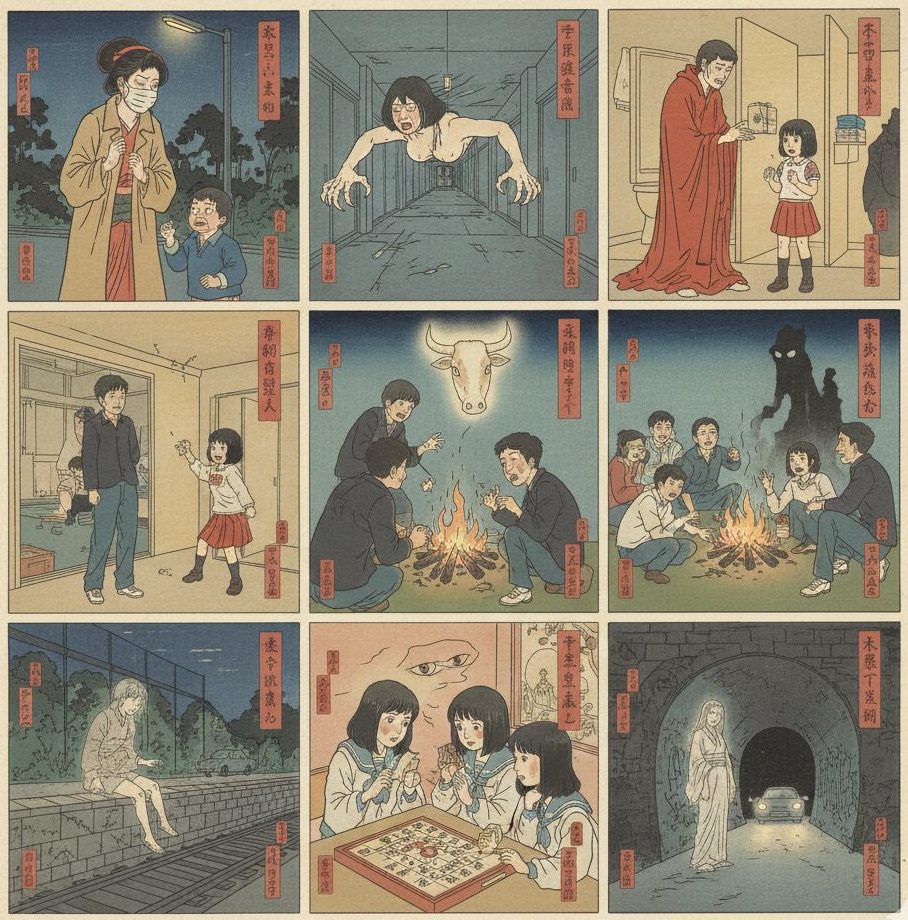
Japan is known for its rich culture, breathtaking landscapes, and deep history.
But beneath its beauty lies something darker — urban legends (都市伝説 / toshi densetsu) that have been whispered for decades.
Some of these stories are based on tragedies, others on unexplained sightings, and many on warnings meant to protect children and adults alike.
we uncover 10 of the most spine-chilling Japanese urban legends that continue to haunt people across the country.
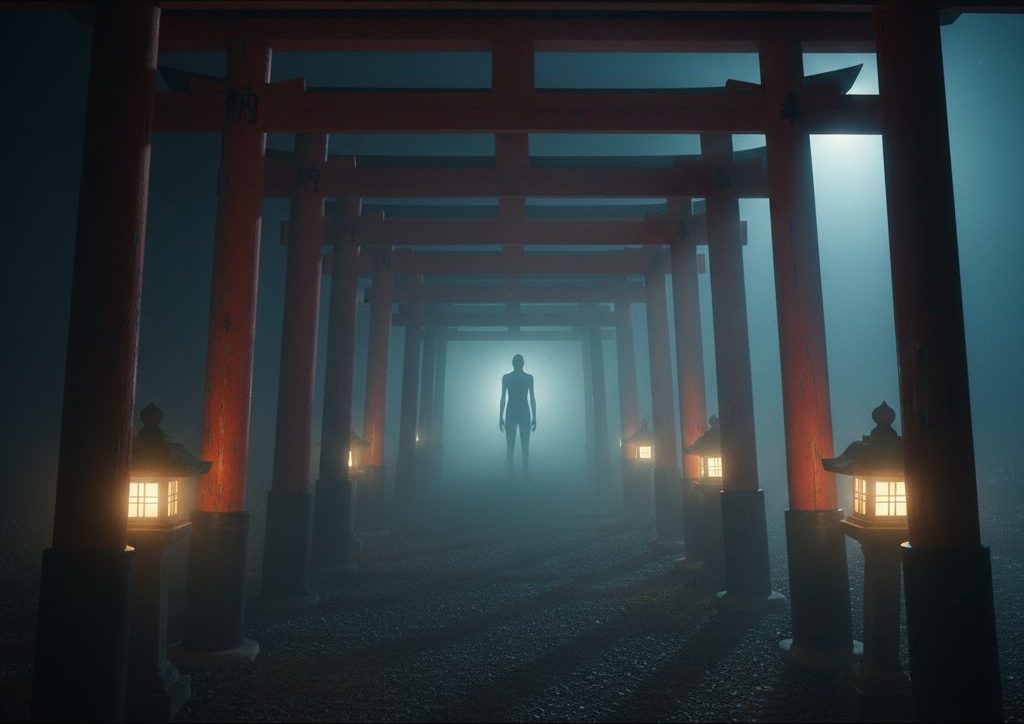
1. The Slit-Mouthed Woman — Kuchisake-Onna
Kuchisake-Onna is said to appear on quiet streets at night, wearing a surgical mask and asking, “Am I beautiful?”
If the answer is wrong — or even sometimes right — she reveals her slit mouth and attacks.
This legend gained nationwide attention particularly among schoolchildren and has remained one of the most famous modern ghost stories in Japan.
2. The Red Room Curse
This internet-based legend tells of a popup window called “The Red Room.”
Those who see it reportedly disappear soon after.
The tale spread rapidly during the early days of online forums and became one of Japan’s first widely known digital urban legends.
3. Kisaragi Station — The Train to Nowhere
According to testimonies online, some people boarded a train late at night and arrived at Kisaragi Station, a place that does not exist on any map.
Attempts to walk away only led them deeper into isolation.
Many believe it symbolizes the fear of being unable to return to reality.
4. The Elevator to Another World
A ritual using an elevator — mostly found on online forums — claims that pressing the floors in a specific sequence transports a person to a different world.
Although widely considered fiction, the story remains popular among horror fans and paranormal explorers.
5. The Ghost in the School Bathroom — Hanako-san
Many Japanese schools have rumors about Hanako-san, a ghost who appears when someone knocks on the third stall in the girls’ bathroom on the third floor.
This story has been retold for decades and remains a staple of school ghost folklore.
6. Teke-Teke — The Vengeful Spirit
The spirit known as Teke-Teke is said to appear crawling at high speed, dragging the upper half of her body.
The name comes from the sound she makes while moving.
This legend gained renewed popularity through books and films.
7. The Living Doll — Okiku Ningyō
A doll stored at a temple in Hokkaido is said to have grown human hair over time.
Visitors report that the hair has become longer each year.
The doll is kept as a memorial, and the story has been retold since before World War II.
8. The Woman in the Gap
Some people claim that a ghostly woman is seen watching from the small dark space between furniture, under beds, or behind doors.
This legend reflects the uniquely Japanese fear of hidden spaces and the unknown.
9. The Hidden Room Tradition
Some homes in Japan — especially older ones — are rumored to contain unused or sealed rooms.
Theories vary from storage for family heirlooms to places associated with past tragedies.
Although the existence of secret rooms is real in some properties, the stories around them have evolved into chilling folklore.
10. The Shadow Following You Home
A common childhood warning tells children not to look back when walking home alone at dusk — because something might follow if they do.
This belief exists in many regions, often tied to protective superstitions.
Final Thoughts: Why Japanese Urban Legends Continue to Spread
Japanese urban legends are not just ghost stories — they reflect:
- cultural fears
- spiritual beliefs
- warnings disguised as lessons
- fascination with the unknown
Even today, schools, train stations, and online forums continue to create new legends, proving that the boundary between fear and imagination will always captivate us.