

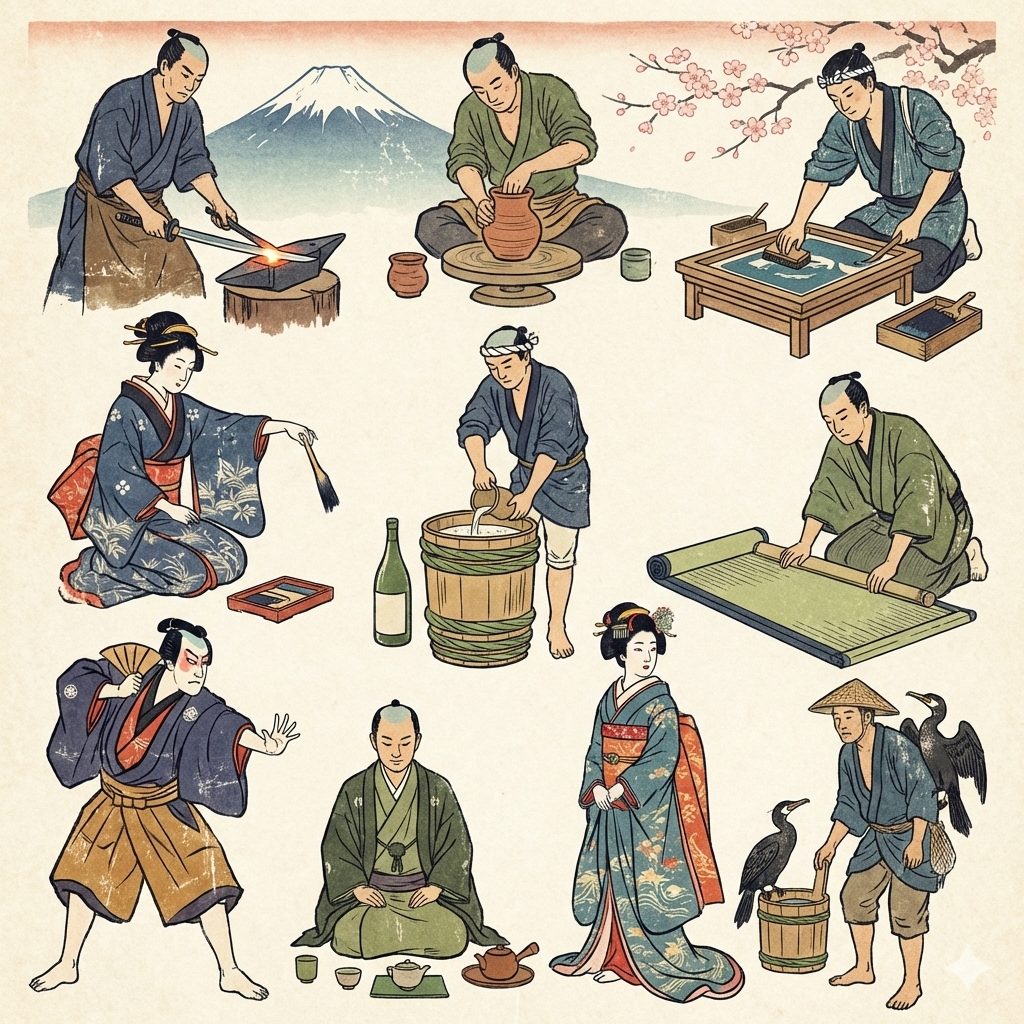
— Preserving Timeless Skills Across Generations —
Japan has a long history of craftsmanship and traditional professions that have been passed down through generations. While many occupations have disappeared due to technological advancements and changing lifestyles, some continue to thrive even today. Here are 10 amazing traditional Japanese professions that still exist!
1. Katana Swordsmith (刀鍛冶 – Katana Kaji) – Masters of Japanese Swords
The Japanese katana has long been a symbol of samurai culture. Although swords are no longer used in combat, skilled swordsmiths still forge katana today as works of art and cultural heritage.
✅ Amazing Facts:
- Crafting a single katana can take months or even over a year.
- The “folding and forging technique” is unique to Japanese sword-making.
- Modern katana are used in martial arts and preserved as cultural treasures.
2. Candy Peddler (飴売り – Ame Uri) – Selling Traditional Japanese Candy
Candy peddlers have been a part of Japanese street culture since the Edo period. You can still find amezaiku (candy sculptors) creating intricate candy figures at festivals and tourist spots.
✅ Amazing Facts:
- Amezaiku artists shape candy into detailed animal or character figures in just minutes.
- Candy-making techniques date back over 400 years.
- Some Japanese candy makers perform internationally.
3. Washi Paper Maker (紙漉き職人 – Kamisuki Shokunin) – Crafting Traditional Japanese Paper
Washi (Japanese paper) has been made for over 1,000 years and is still used in calligraphy, art, and interior design. The Echizen, Mino, and Tosa washi are especially famous for their quality.
✅ Amazing Facts:
- Washi is incredibly durable, lasting hundreds of years.
- It was recognized as a UNESCO Intangible Cultural Heritage in 2014.
- Modern applications include washi art, stationery, and home décor.
4. Wagasa Maker (和傘職人 – Wagasa Shokunin) – Artisans of Traditional Umbrellas
Wagasa are traditional Japanese umbrellas made from bamboo and washi paper. Though modern plastic umbrellas are more common, wagasa makers continue to produce these handcrafted works of art.
✅ Amazing Facts:
- Making a single wagasa requires over 100 steps.
- The combination of bamboo and washi creates both beauty and durability.
- Some designers are incorporating wagasa into modern interior lighting.
5. Ukiyo-e Woodblock Carver (浮世絵彫師 – Ukiyo-e Horishi) – Preserving the Art of Japanese Woodblock Printing
Ukiyo-e, a traditional Japanese woodblock printing technique, requires skilled artisans known as “horishi” (carvers) and “surishi” (printers). Despite its historical roots, ukiyo-e remains popular in modern art and printmaking.
✅ Amazing Facts:
- Creating a single ukiyo-e print involves over 10 layers of color printing.
- Ukiyo-e was Japan’s version of pop art during the Edo period.
- Many famous ukiyo-e works are exhibited in museums worldwide.
6. Tatami Maker (畳職人 – Tatami Shokunin) – Keeping Japan’s Traditional Flooring Alive
Tatami mats have been a staple of Japanese homes for centuries. While many modern homes use Western-style flooring, tatami makers continue to produce high-quality traditional mats.
✅ Amazing Facts:
- The scent of igusa (rush grass) in tatami is said to have a relaxing effect.
- The craftsmanship affects the mat’s durability and comfort.
- Some modern designs include colorful or modular tatami mats.
7. Urushi Lacquerware Artisan (漆職人 – Urushi Shokunin) – Masters of Japanese Lacquer Coating
Urushi (Japanese lacquer) is used to coat traditional wooden bowls, furniture, and fine art. The process involves applying multiple layers of lacquer for a smooth, glossy finish.
✅ Amazing Facts:
- Some urushi lacquerware can last over 1,000 years.
- The technique is even applied to luxury car paint today.
- Japanese lacquerware is highly valued in high-end restaurants worldwide.
8. Chochin Lantern Maker (提灯職人 – Chōchin Shokunin) – Keeping Traditional Paper Lanterns Glowing
Chochin lanterns, made from bamboo and washi paper, have been used for centuries in temples, shrines, and festivals. Today, handmade lanterns are still crafted for both traditional and modern uses.
✅ Amazing Facts:
- Chochin lanterns have a collapsible structure, making them easy to carry.
- They are now used in modern interior design.
- The soft glow of washi lanterns pairs beautifully with LED lighting.
9. Uchiwa Fan Maker (うちわ職人 – Uchiwa Shokunin) – Masters of Traditional Hand Fans
Uchiwa fans, crafted from bamboo and paper, have been used since the Edo period. Handmade uchiwa are still produced today, particularly in Marugame, Kagawa Prefecture, known for its high-quality fans.
✅ Amazing Facts:
- Bamboo makes these fans lightweight yet durable.
- Traditional uchiwa feature hand-painted designs.
- Custom-designed uchiwa are becoming popular as souvenirs and gifts.
10. Geta Craftsman (下駄職人 – Geta Shokunin) – Makers of Traditional Wooden Sandals
Geta are traditional Japanese wooden sandals worn with yukata and kimono. Even today, geta craftsmen create custom footwear tailored to the wearer’s comfort and needs.
✅ Amazing Facts:
- Some geta are custom-made to fit an individual’s foot perfectly.
- The type of wood affects the sound and comfort of walking.
- Geta are gaining popularity abroad as “Japanese-style sandals.”
Conclusion
Despite modernization, these traditional professions continue to thrive, preserving Japan’s rich cultural heritage. Whether through art, craftsmanship, or everyday items, these artisans keep history alive while adapting to the present. Have you encountered any of these traditional crafts?