

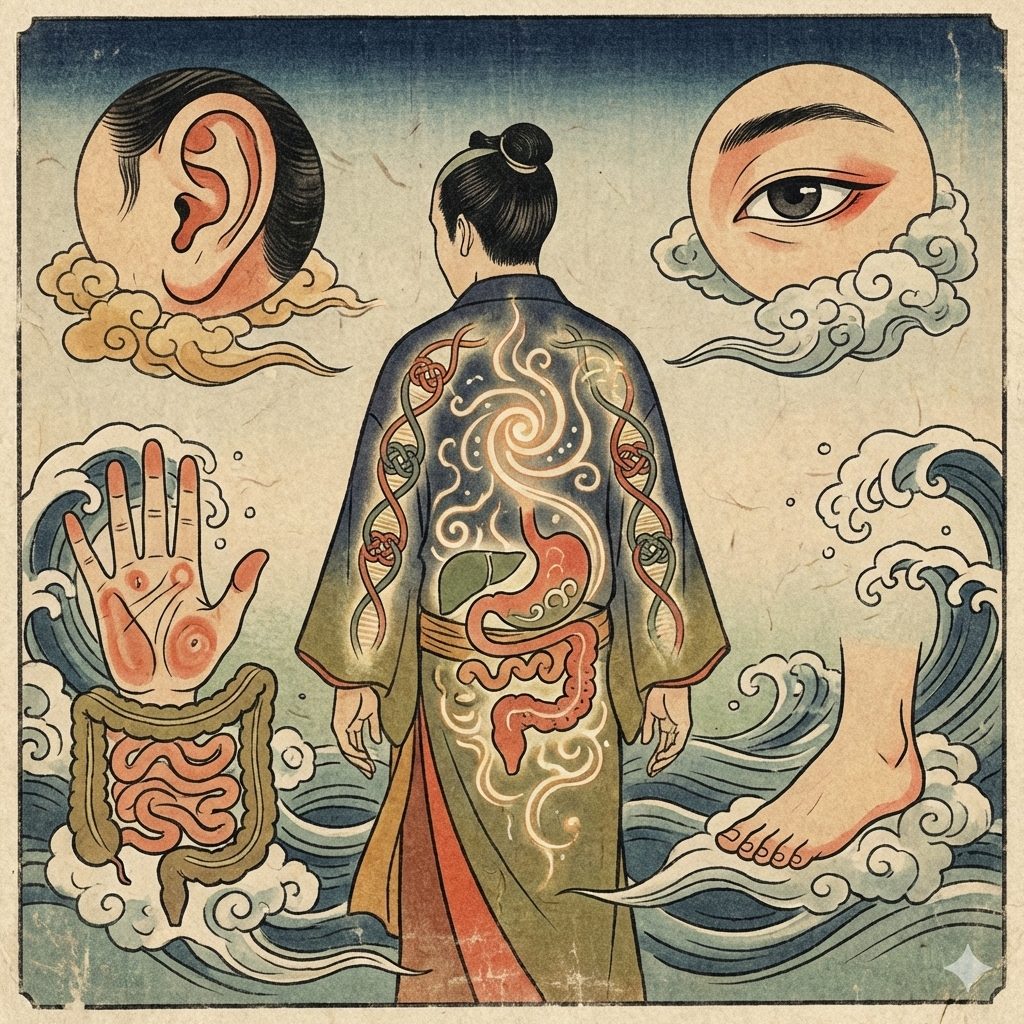
Introduction: How Do Japanese Bodies Differ from the Rest of the World?
Japan is often admired for its unique culture, but few people know that Japanese people also have distinct biological traits. These characteristics are not cultural but genetic—differences deeply rooted in DNA that set Japanese people apart from other ethnic groups around the world.
In this article, we explore five scientifically supported physical traits that are particularly common among Japanese people. These differences can affect everything from daily hygiene habits to dietary tolerance and medical risks.

1. Dry Earwax Is the Norm
One of the most curious biological traits in Japanese people is their earwax type. There are two types of earwax: wet and dry. While most of the global population has wet, sticky earwax, about 70% to 90% of Japanese people have dry, flaky earwax.
This is caused by a variant in the ABCC11 gene, which not only determines earwax type but also affects other traits such as body odor. The dry earwax trait is common across East Asian populations but rare in people of European or African descent.
2. Low Body Odor Due to Fewer Apocrine Glands
Body odor is influenced largely by the activity of apocrine sweat glands, and Japanese people tend to have significantly fewer of these glands compared to other populations.
This again ties back to the ABCC11 gene variant. Because apocrine glands are responsible for producing the kind of sweat that bacteria break down into odor, having fewer of them means less body odor.
As a result, body odor is generally milder among Japanese people, which has even influenced cultural norms—such as the lesser use of deodorants in Japan compared to Western countries.
3. High Prevalence of Lactose Intolerance
Do you feel bloated or uncomfortable after drinking milk? If you’re Japanese, you’re not alone. About 80–90% of Japanese adults are lactose intolerant, meaning they cannot digest lactose properly.
Lactose intolerance occurs when the body produces less lactase—the enzyme needed to digest lactose in dairy products—as people grow older. This is very common among East Asians, while Northern Europeans typically retain the ability to digest milk into adulthood.
This biological trait has historical roots, as dairy farming and milk consumption became widespread much later in East Asia compared to Europe.
4. High Sensitivity to Alcohol
Many Japanese people experience symptoms such as facial flushing, nausea, or dizziness after drinking even a small amount of alcohol. This is due to a deficiency in the ALDH2 enzyme, which is responsible for breaking down acetaldehyde—a toxic byproduct of alcohol metabolism.
About 40–50% of Japanese people carry an inactive form of the ALDH2 gene, leading to a condition known as “alcohol flush reaction.” This genetic trait is common in East Asia but almost nonexistent in Western populations.
If you get red-faced after drinking, it’s not just a harmless reaction—it may increase the risk of certain cancers due to the buildup of acetaldehyde in the body.
5. Enamel Structure Leads to Higher Risk of Cavities
Japanese people tend to have a higher rate of cavities, and genetics may be one of the reasons. Studies suggest that Japanese individuals often have thinner or softer tooth enamel, making their teeth more vulnerable to acid attacks from bacteria.
Moreover, until recently, Japan lagged behind Western countries in dental preventive care—such as fluoride usage and regular dental checkups. Although this has been improving, dental health challenges persist.
As awareness grows, more Japanese are adopting preventive dentistry practices like fluoride treatments, sealants, and routine cleanings to combat this inherent risk.
Conclusion: Genetics Shape Health and Habits
These five physical traits—dry earwax, low body odor, lactose intolerance, alcohol sensitivity, and cavity-prone enamel—are all backed by genetics and particularly common among Japanese people. While they may seem minor, these biological differences can influence personal habits, healthcare needs, and even cultural norms.
Understanding your own genetic tendencies isn’t just interesting—it can lead to better health decisions and a more tailored lifestyle. Whether you’re Japanese or simply curious, these insights provide a fascinating look into how our bodies reflect our heritage.
If you’re planning to travel to Japan or exploring Japanese health trends, knowing these traits could offer valuable context into Japanese society and wellness practices.