

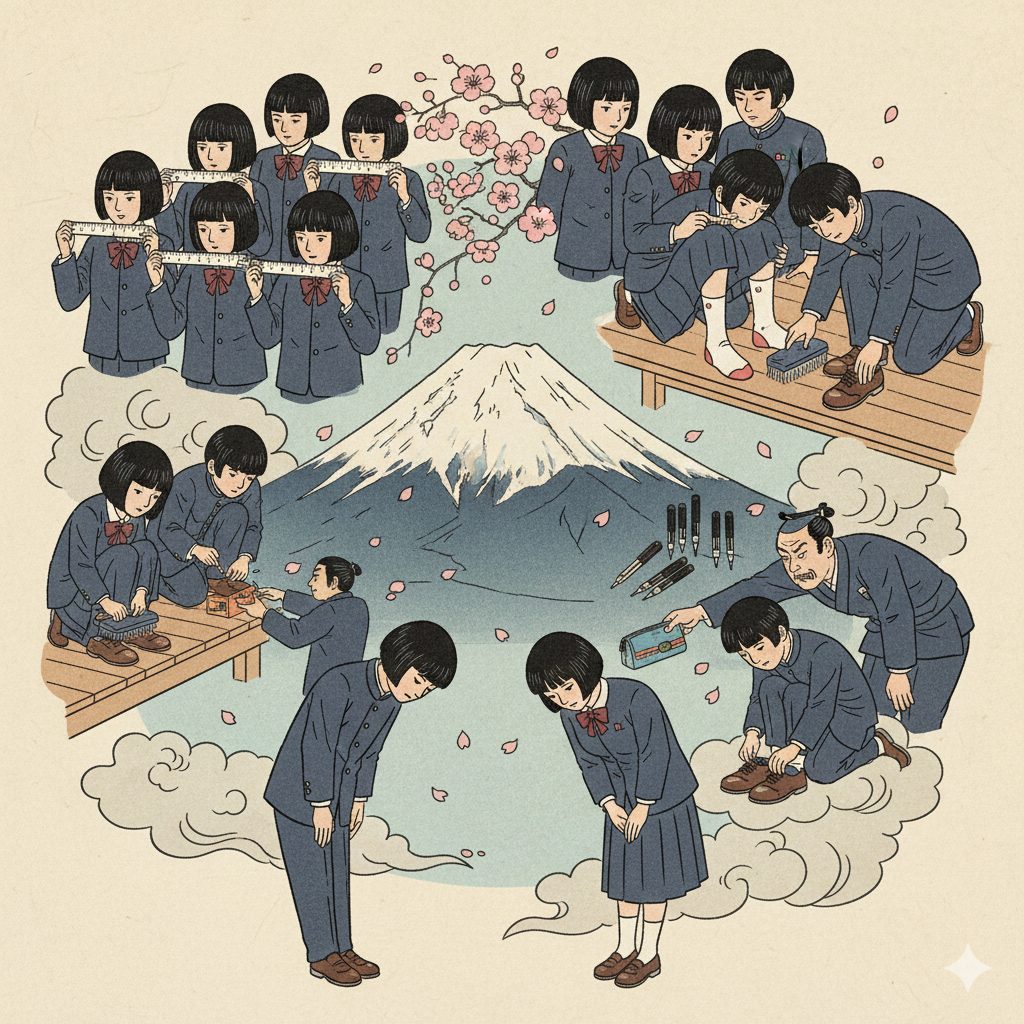
Japanese schools have a variety of unique rules that may seem strange to outsiders. These regulations are often based on cultural values, safety concerns, or traditional practices that have been passed down over generations. Here are 10 of the most surprising and unusual school rules in Japan.
1. Students Are Forbidden from Riding Drift Ice on Their Way to School
In certain parts of Hokkaido, where drift ice appears in winter, students are explicitly prohibited from stepping onto the ice while commuting to school. This rule was created as a safety measure after cases where students attempted to climb onto the floating ice.
✅ Key Points:
- The rule was implemented because some students actually tried it.
- A rare example of school regulations tailored to extreme natural conditions.
2. Students Can Take a Day Off If Their Family’s Farm Animals Are Giving Birth
In rural areas where agriculture is a major industry, some schools allow students to take the day off to assist in the birth of farm animals, such as cows or horses. This rule acknowledges the importance of farming in family life.
✅ Key Points:
- Recognizes farm work as an essential duty for students in agricultural regions.
- Absences due to animal births are excused and can be made up later.
3. Fundoshi (Traditional Japanese Underwear) Is Not Allowed in Swimming Classes
Some schools have a rule explicitly banning students from wearing fundoshi (a traditional Japanese loincloth) during swimming lessons. This rule emerged because, in the past, some students insisted on wearing it instead of regular swimwear.
✅ Key Points:
- Reflects the shift from traditional to modern swimwear in schools.
- A rare example of schools adapting dress codes to changing societal norms.
4. Romantic Relationships Must Be Limited to Fellow Students
Some schools allow students to have romantic relationships but impose a strict rule that their partner must also be a student from the same school. Relationships with students from other schools are prohibited, although the reason behind this rule remains unclear.
✅ Key Points:
- An unusual attempt to control students’ personal lives.
- Breaking this rule could lead to counseling sessions with teachers.
5. Second Button of the Uniform Cannot Be Given Away at Graduation
In Japan, there is a romantic tradition where students give the second button of their school uniform to someone they like at graduation. However, some schools ban this practice, arguing that students should take care of their uniforms.
✅ Key Points:
- The rule was made to protect the condition of school uniforms.
- A clash between a cultural tradition and school regulations.
6. Students Must Report Their Romantic Relationships to the School
At certain schools, students are required to inform teachers if they start dating someone. This rule is intended as a form of life guidance, allowing teachers to provide advice and ensure relationships do not interfere with academics.
✅ Key Points:
- Aims to monitor students’ personal lives for their well-being.
- Some students find it embarrassing, while others take it lightly.
7. Dress Code Violators Must Keep a Diary with the Vice Principal for Six Months
In some schools, students who violate dress codes must write a daily journal and exchange it with the vice principal for six months. Rather than a strict punishment, this rule serves as a way to encourage self-reflection and foster communication between students and teachers.
✅ Key Points:
- A unique approach to discipline through written communication.
- Some students end up enjoying the experience.
8. Cleaning Time Must Be Done in Complete Silence
Japanese schools require students to clean classrooms and hallways, but some schools enforce a rule where students must remain silent while doing so. This is meant to help them concentrate and develop discipline.
✅ Key Points:
- Reflects Japan’s cultural emphasis on silent, focused work.
- Creates an almost meditative atmosphere during cleaning time.
9. Students Are Strictly Forbidden from Buying Lottery Tickets
While underage gambling is illegal in Japan, some schools go as far as to explicitly ban students from purchasing lottery tickets in their school rules.
✅ Key Points:
- Ensures students develop responsible financial habits.
- A curious rule, considering that minors cannot claim lottery winnings anyway.
10. Zori (Straw Sandals) Are Allowed, But Geta (Wooden Clogs) Are Banned
In one particular school, students are allowed to wear zori (traditional straw sandals) but are prohibited from wearing geta (wooden clogs). The rule exists due to concerns about noise and the risk of tripping.
✅ Key Points:
- A surprisingly detailed distinction between traditional footwear.
- A humorous example of how specific school rules can get.
Conclusion
・ Japanese schools have a variety of unique rules that may seem odd but are often rooted in tradition, safety concerns, or discipline.
・ While some rules reflect outdated customs, others continue to adapt to modern student life.
・ Even today, new and unusual school regulations continue to emerge in Japan.
Does your school have any strange or unique rules?