

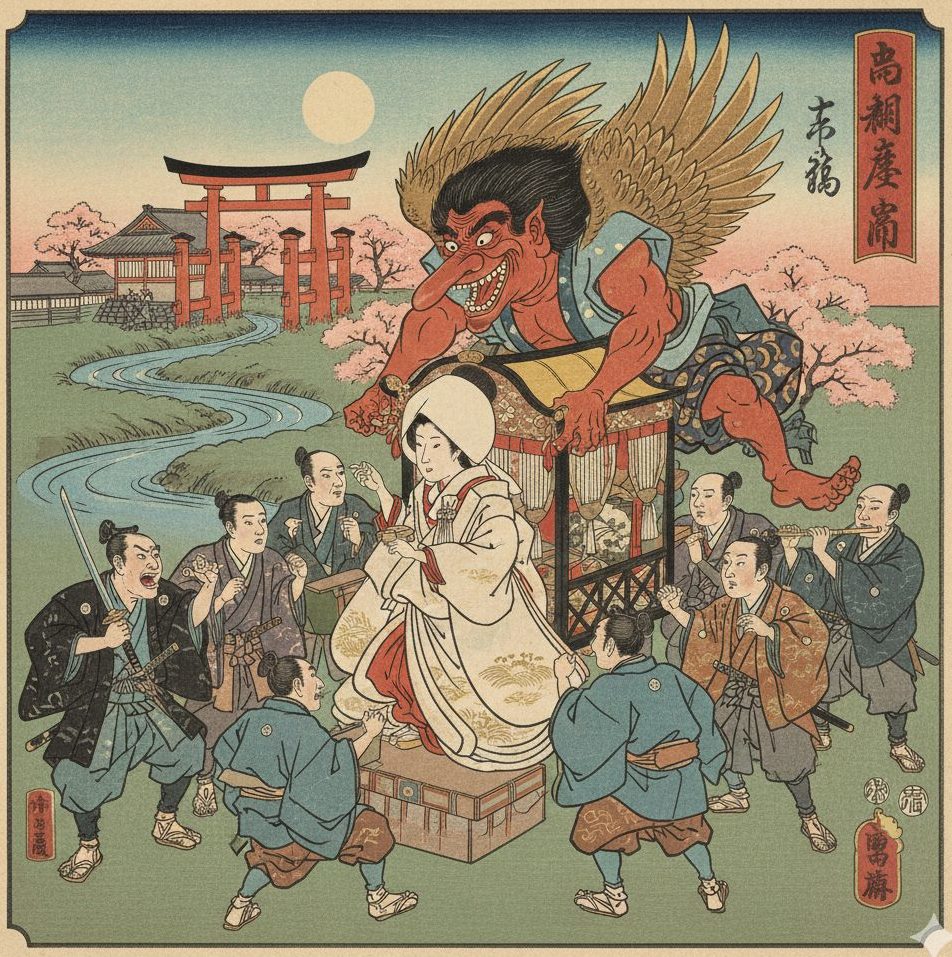
Japanese wedding customs have undergone significant changes throughout history.
While today’s weddings often reflect personal expression and modern aesthetics, weddings in the past were deeply rooted in social roles, family obligations, and cultural traditions.
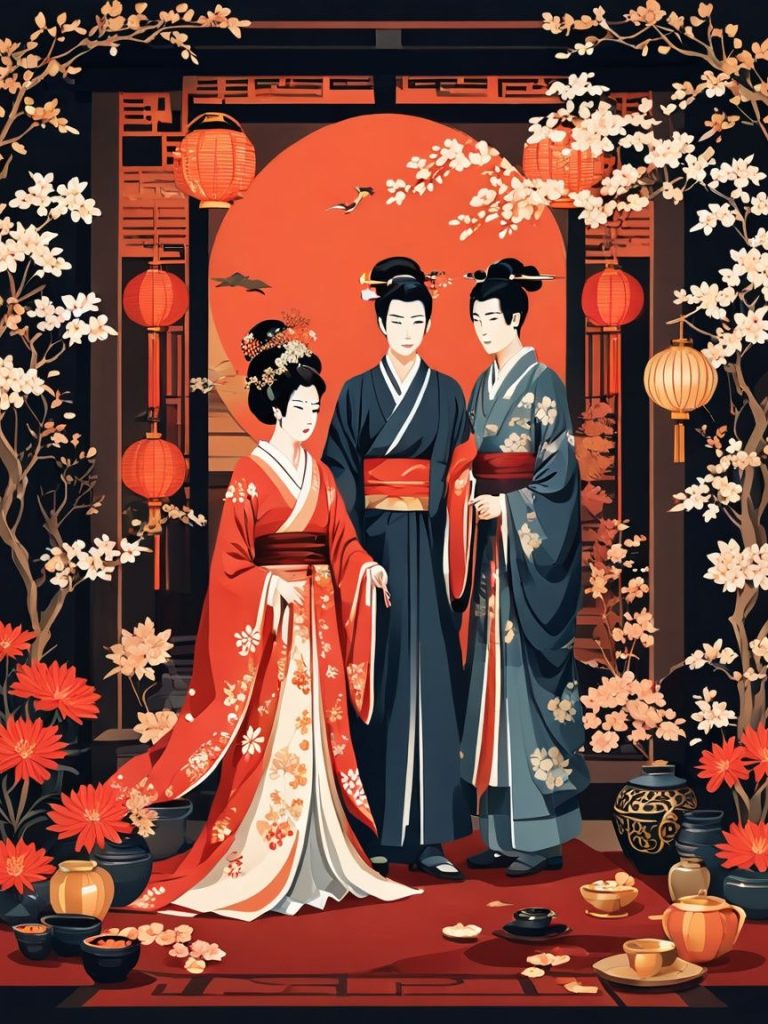
Ancient Marriage Customs: Tsuma-tori and Yome-iri
In ancient Japan, two primary marital structures existed: tsuma-tori-kon (wife-visiting marriage) and yome-iri-kon (bride-entering marriage).
In the former, a man would visit a woman’s residence, often living apart from his wife even after marriage.
This was especially common among aristocrats during the Heian period. In yome-iri-kon, the bride moved into the groom’s household, aligning more with what is considered modern cohabitation.
These marriages were not rooted in romantic love. Rather, they were often alliances between families intended to maintain or elevate social standing, particularly in noble and warrior classes. Marriage was also polygynous among high-status males, and women were sometimes married at very young ages, reflecting a different set of social norms and values from today.
Marriage as a Family and Political Alliance
During Japan’s feudal era, especially the Kamakura through Edo periods, marriage functioned almost exclusively as a tool of political alliance and social reinforcement. Family heads would arrange marriages between their children to strengthen ties with other powerful clans or to acquire land and influence.
For samurai families, marriage was less about individuals and more about households. The kekkon rei (marriage ceremonies) during this time involved detailed negotiations, formal exchanges of betrothal gifts, and public recognition through feasts or community announcements. Dowries (yui-no) were common and signified the wealth and status of the bride’s family.
This system left little room for personal choice. Women, in particular, were often betrothed with no say in the matter and were expected to uphold the honor and legacy of their husband’s household.
The Meiji Era and the Emergence of Shinto Wedding Ceremonies
One of the most significant shifts in Japanese wedding customs occurred in the Meiji period (1868–1912). In 1900, the then-Crown Prince Yoshihito (later Emperor Taishō) married Sadako Kujō in a ceremony held at the Imperial Palace’s Shinto shrine. This marked the beginning of the shinzen kekkon-shiki or Shinto-style wedding ceremony.
In response, Tokyo Daijingu Shrine began offering Shinto-style weddings to the public in 1901, setting the standard for formal religious ceremonies in Japan. These weddings emphasized ritual purity, including prayers to the kami (gods), purification rites, and the exchange of ritual sake (san-san-kudo, or three-three-nine-times).
For the first time, wedding ceremonies became religious and spiritual events tied to national identity. This also established the bride and groom as the central figures in the ceremony, rather than the families.
The Bride’s Procession and Regional Customs in the Early Showa Period
By the early Showa era (1926–1989), marriage rituals still included many regional variations, but shared common symbolic elements, such as the bride’s procession to the groom’s home. In some coastal towns, like Sakoshi in Akō City, Hyogo Prefecture, brides would be led in lantern-lit processions through the streets, accompanied by music and onlookers.
Weddings would begin with a purification ceremony at the local Shinto shrine, followed by the sake-sharing ritual. The symbolism of sake represented the spiritual unity of the couple and the joining of their families.
The spectacle was not only a community affair but also a way to showcase the bride’s family wealth through elaborate kimono, ornate hairpieces, and traditional makeup.
The Role of “Hanayome Dogu” (Bridal Tools)
Another distinct tradition was the hanayome dogu, or bridal tools—luxurious items the bride brought to her new household. These included chest drawers, futon sets, kimono, and accessories, often crafted with family crests and intricate lacquerwork.
These tools were transported ceremoniously, sometimes days in advance, and served as a public display of the bride’s upbringing and family wealth. The delivery was often accompanied by music and sometimes even paraded down the streets, drawing spectators.
This tradition emphasized the permanence of marriage and the bride’s transition into a new life. The tools served practical purposes but also carried deep symbolic meaning regarding duty, fertility, and homemaking skills.
The Transformation of Wedding Receptions
The kekkon hiroen (wedding reception) evolved alongside ceremony styles. In earlier periods, the reception itself could serve as the main marriage declaration. Guests were gathered, food and sake were served, and the marriage was thereby acknowledged publicly.
As Shinto-style weddings became widespread, receptions became distinct from the religious ceremony and served more as a celebratory social function. Seating arrangements, toasts, and entertainment became more formalized, especially among urban upper classes.
Interestingly, by the mid-20th century, it was not uncommon for receptions to be larger and more lavish than the actual ceremony, especially during Japan’s postwar economic boom.
Social Pressures and Marriage Age
Historically, marriages in Japan occurred at what would now be considered shockingly young ages. In the Edo period, girls could be married as early as 13 or 14. These unions were legal and socially sanctioned, particularly among noble families where producing heirs was a priority.
Marriages were arranged by parents or go-betweens (nakoudo), and declining a proposed match could bring shame or social ostracism. Love matches were rare and often discouraged unless the families approved.
Even into the early Showa period, arranged marriages (known as omiai) remained the norm. The bride and groom sometimes met for the first time on the day of the wedding. Divorce, though technically legal, was often discouraged or stigmatized, particularly for women.
The Psychological Burden on Brides
The emotional toll on brides was significant. Young women were often uprooted from their homes and placed in unfamiliar households, where they were expected to obey new family customs, care for in-laws, and produce children. The pressure was immense, and many brides faced emotional isolation.
Traditional weddings often emphasized the bride’s obedience and service, not just to her husband but to his entire family. The absence of emotional support systems, combined with expectations of silence and submission, made early marriage a challenging experience for many women.
This context adds a deeper layer to understanding the more formal, even austere, elements of traditional Japanese weddings—they were not just rituals of joy, but mechanisms of social control and hierarchy.
Conclusion
Traditional Japanese weddings, far from being simple ceremonies of love and unity, were often intricate systems of familial duty, political alliance, and social structure. From ancient tsuma-tori marriages and aristocratic alliances to Shinto rites and public parades, every aspect of the wedding process was steeped in symbolism and responsibility.
What might seem extreme by today’s standards—early marriages, elaborate dowries, emotionally detached unions—were, in their time, considered appropriate and essential for maintaining order and status in society.
Understanding this complex history offers a fascinating window into how cultural expectations around marriage have shifted over the centuries. It also reminds us that what we now take for granted as “normal” in weddings is a product of specific historical, social, and economic contexts that continue to evolve.