

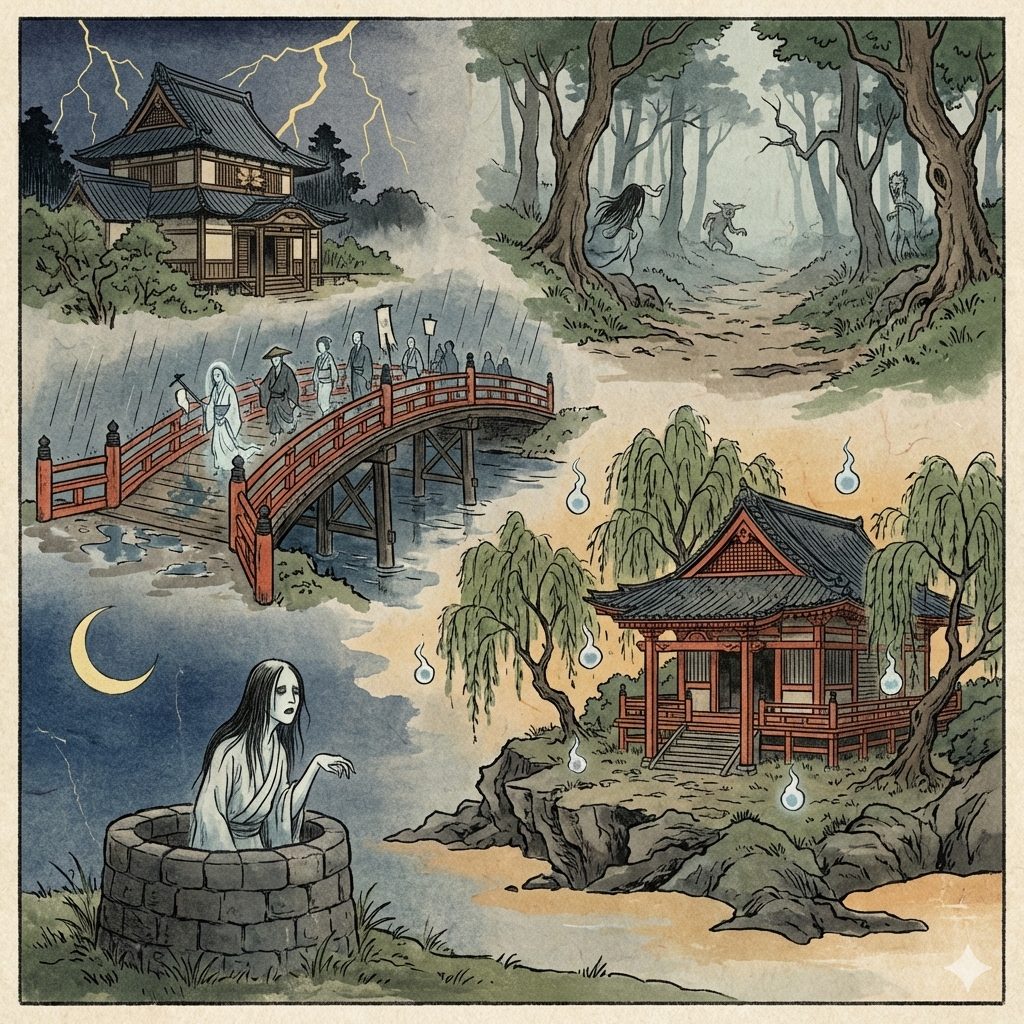
Even in Edo, the capital of the Tokugawa shogunate, there were places so frightening they were said to be untouchable. Many of these sites still exist in modern-day Tokyo, carrying with them the memories and fears of a time long past.
This article introduces five haunted places that truly existed during the Edo period and were genuinely feared by the people. We will also explore their historical backgrounds and current status.
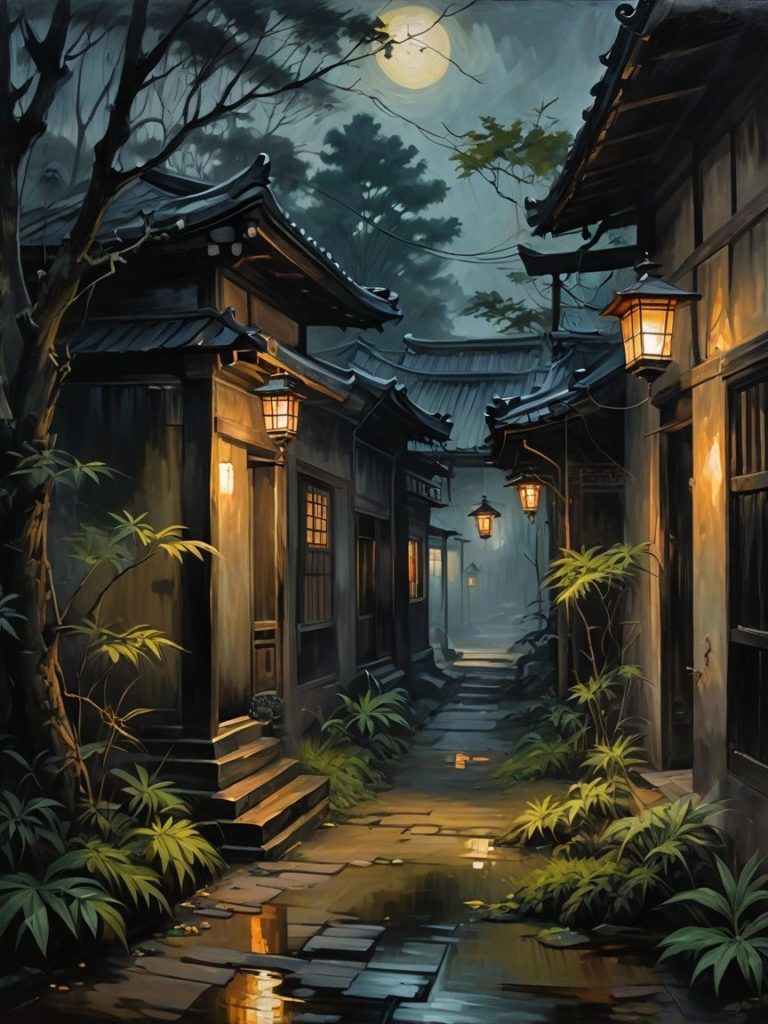
Yotsuya Sanchome: The Setting of the Yotsuya Ghost Story
Yotsuya Sanchome is widely known as the setting for one of Japan’s most famous ghost stories, “Yotsuya Kaidan.” The story revolves around Oiwa, a woman betrayed by her husband who died a tragic death. Her vengeful spirit became legendary and has been depicted in numerous kabuki plays and films.
The real-life grave of Oiwa, the model for the story, still exists today at Youunji Temple in Shinjuku Ward. Many people continue to visit and offer prayers, a testament to how her spiritual presence remains etched in collective memory.
Oiwa Inari Tamiya Shrine: A Shrine That Actors Fear
Also located in Shinjuku, the Oiwa Inari Tamiya Shrine is another site associated with Oiwa’s spirit. It was built to appease her ghost, and even today, actors and stage performers visit the shrine before staging any performance of Yotsuya Kaidan.
There are stories of mishaps and accidents occurring if this ritual is skipped, and the belief remains strong. The shrine continues to draw regular visitors, especially those in the performing arts.
Fukagawa’s Ghostly Lanterns: The Mysterious Lights of the Dead
In the old downtown area of Fukagawa, there were tales of ghostly phenomena known as “okuri chōchin” or “farewell lanterns.” These involved mysterious lantern lights that would approach on empty streets with no one carrying them. Edo residents believed these were the guiding lights of the dead.
Although these stories lack specific names or dates, they were widely reported throughout various neighborhoods in Fukagawa and became a deeply rooted part of the city’s folklore. Even now, the quiet nighttime corners of modern Fukagawa carry a faint sense of mystery.
Ryogoku’s Skeleton Hall: A Sideshow of Human Bones
The “Gaidokudo,” or Skeleton Hall, once stood in Ryogoku and was both a popular sideshow and a feared location. It featured real human bones on public display, and there are theories that the bones belonged to unclaimed corpses or executed criminals.
People were drawn to it by a mix of fear and curiosity. Stories circulated about people falling ill after visiting or seeing a ghost inside. It was more than just entertainment; it was a chilling reminder of death and the unknown.
Ueno’s Severed Head Mound: Spirits of Fallen Warriors
Located within Ueno Park is a mound believed to contain the severed heads of samurai who died in the Battle of Ueno. Known as the Kubizuka, or Head Mound, it has long been associated with ghost sightings, especially at night.
Today, the area is still quietly maintained, and some visitors leave incense or prayers. Amid the hustle and bustle of Ueno, this solemn space preserves a sense of reverence and spiritual presence.
Conclusion: The Lingering Fear of the Unseen in Edo
During the Edo period, scientific understanding was limited, making people more receptive to stories of ghosts and the supernatural. These tales were often grounded in real events, places, and figures, giving them a weight that went beyond mere superstition.
The haunted locations that remain today are not just remnants of folklore—they are historical sites that still have the power to provoke curiosity and unease. Next time you’re walking through Tokyo, take a moment to reflect on the memories these places hold. Perhaps you’ll hear the whispers of the past.