

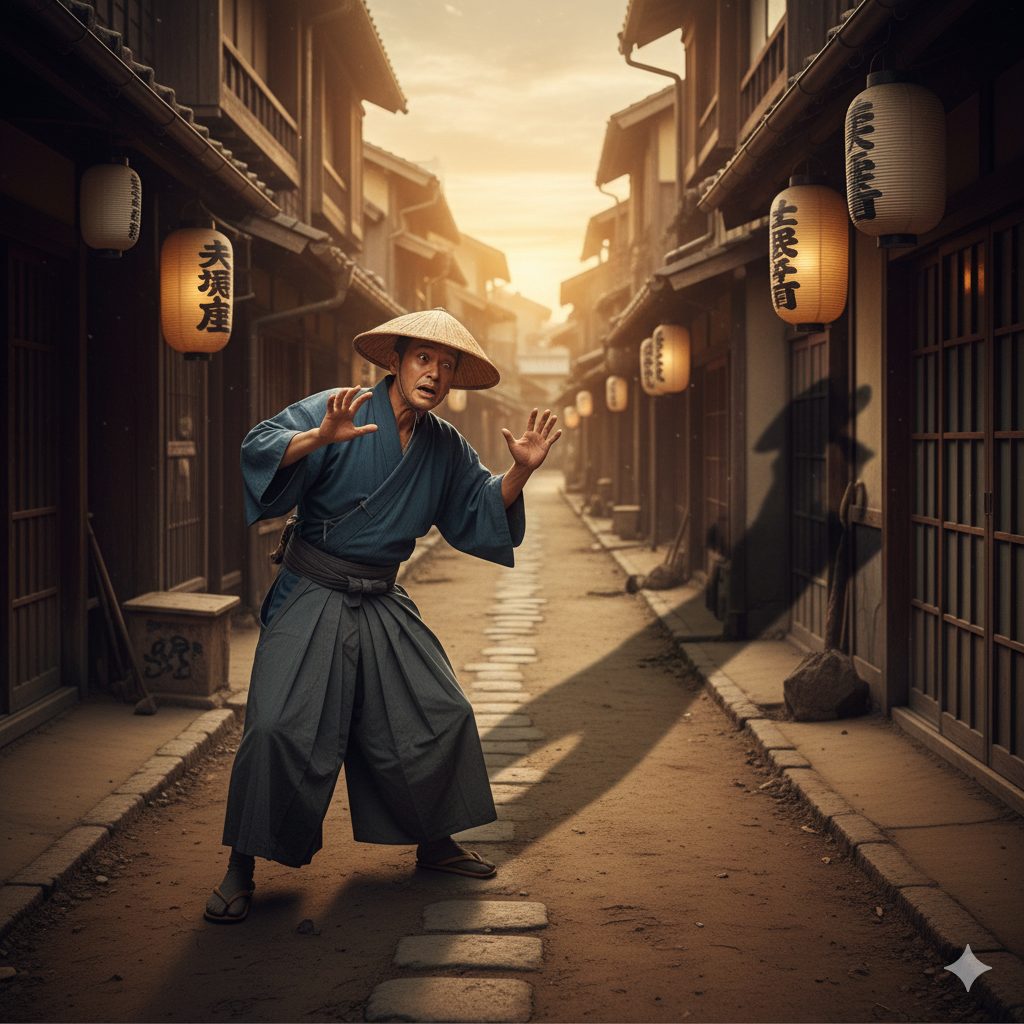
The Soul in the Shadow — Japan’s Belief in the “Other Self”
In ancient Japan, it was believed that a person’s shadow or reflection contained their spirit.
To step on someone’s shadow was to bind their soul.
Even in modern times, echoes of this belief remain in sayings like “having your soul taken in a photograph.”
Old folktales often tell of people who lost their shadows—and soon after, their lives.
To lose your shadow meant to lose your soul’s connection to the body.
For the Japanese, a shadow was not just a lack of light—it was a living proof of one’s spirit.
The “Kagebōshi” — When Shadows Whisper of Misfortune
In the past, people referred to their evening silhouette as kagebōshi, meaning “shadow monk” or “shadow figure.”
But this was not a simple poetic term—it carried a warning.
If one’s kagebōshi looked distorted or moved unnaturally, it was believed to be an omen of bad luck.
Some regions even had a superstition that dreaming of a delayed or wandering kagebōshi meant that misfortune was approaching.
Psychologically, it could represent anxiety or guilt—but in folklore, it was said to be a message from one’s “other self,” a silent warning from within.
Shadows That Remain — Traces of Souls Left Behind
Many Japanese ghost stories tell of “shadows left on walls.”
During disasters or wars, people claimed to see the silhouettes of the dead burned into walls or screens.
Whether coincidence or imagination, these stories reflect a belief that the soul can linger—leaving only its shadow behind.
In such tales, the shadow becomes proof of a spirit’s unfinished business, trapped between worlds.
This mirrors the Japanese view of death as a gradual fading, not a sudden disappearance.
Even after the body is gone, the shadow—an echo of life—may remain.
Everyday Superstitions — “Don’t Step on Shadows”
Children in old Japan were warned, “Don’t step on others’ shadows.”
This was not just politeness—it came from the belief that a person’s shadow contained their spirit.
Similarly, shining a bright light to erase one’s own shadow at night was thought to weaken the soul.
These small customs show how ancient ideas still live quietly in modern life.
Even if we no longer believe literally, the respect for invisible boundaries remains deeply Japanese.
The Folklore Lives On — Shadows in Modern Storytelling
From horror films to literature, Japan continues to explore the eerie idea of “the shadow that moves by itself.”
It is not only a scary image—it symbolizes the part of ourselves we cannot fully understand or control.
The concept of the “double self” runs deep in Japanese imagination, from traditional Noh theater to modern anime.
A shadow, after all, is a mirror of our inner world—always with us, yet beyond our grasp.
Conclusion — To Face the Shadow Is to Know the Self
As long as there is light, there will be a shadow.
It follows us, reflects us, and sometimes warns us.
Perhaps the ancients saw something we still feel today—that within every person, there is another self quietly watching.
Next time you see your long shadow stretching across the evening ground, take a moment to look closely.
Ask yourself quietly—
What expression does your shadow wear tonight?