

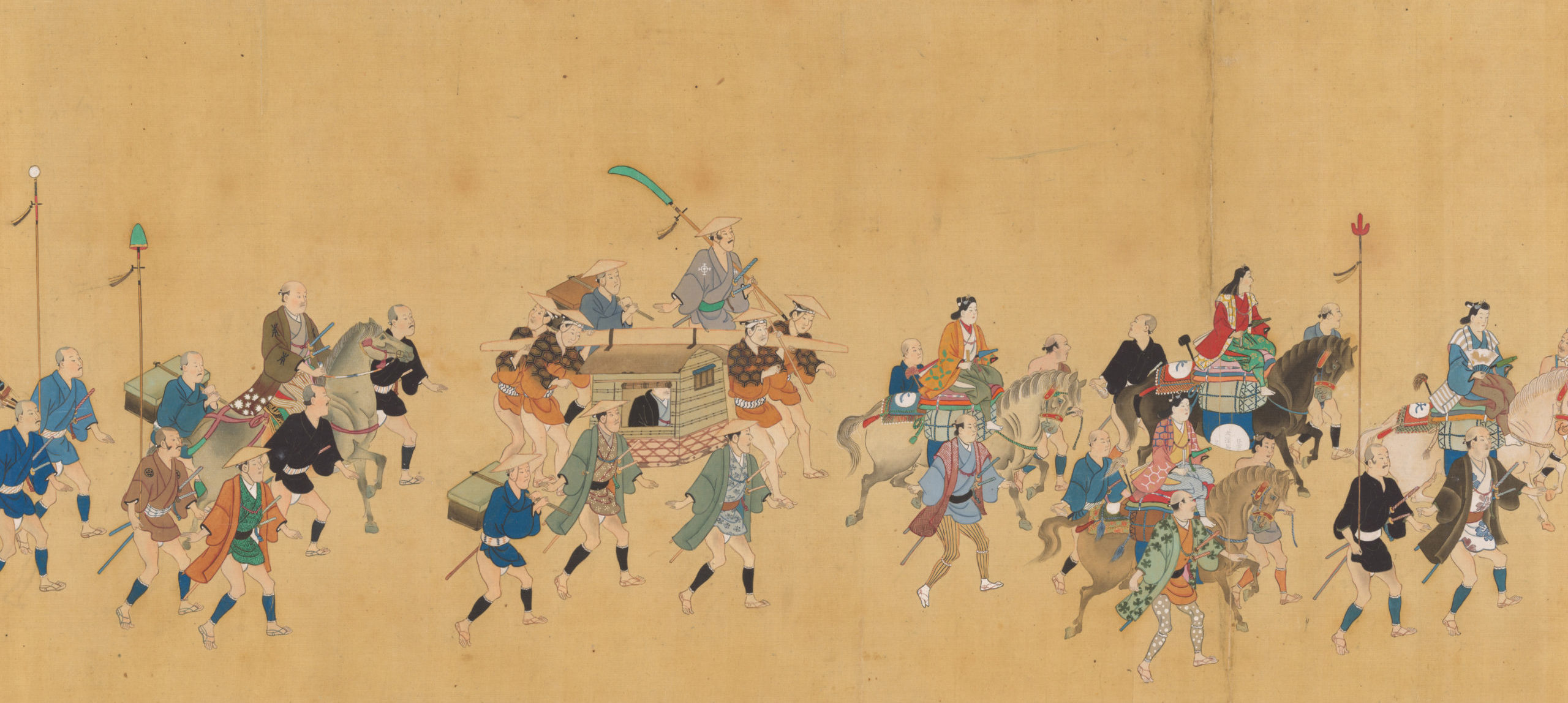
Sankin-kotai, the alternate attendance system of the Edo period, is widely recognized as a method used by the Tokugawa shogunate to control the powerful regional lords (daimyo).
The financial burden of traveling to and residing in Edo (modern-day Tokyo) was significant, making rebellion nearly impossible for many domains.
However, recent scholarship has revealed that the system may have served several other purposes beyond simple political suppression.
In this article, we explore four lesser-known but important functions of sankin-kotai and examine how this complex system shaped Japanese society.
Cultural Exchange and Information Gathering
Sankin-kotai functioned not only as a means of control but also as a vehicle for cultural exchange and information flow.
With daimyo and their retinues gathering in Edo regularly, a natural exchange of regional technologies, ideas, and cultural practices occurred. Local crafts, foods, and regional traditions were introduced to Edo, influencing fashion, commerce, and artisanal development.
For the shogunate, this was also a strategic opportunity to gather intelligence. Hosting daimyo in the capital allowed the central government to observe their behavior, gain insight into regional conditions, and monitor political stability throughout the country.
Monitoring Loyalty of Vassals
An often-overlooked aspect of sankin-kotai is its role in verifying the loyalty of daimyo retainers. It was not only the lords themselves who had to travel—many samurai and key officials also accompanied them.
By traveling together and living under close supervision, daimyo could assess the trustworthiness and discipline of their vassals. At the same time, the shogunate could study the relationships and dynamics within each domain’s leadership. This level of scrutiny helped to prevent internal conflicts or plots, effectively maintaining political order within the feudal hierarchy.
Stimulating the Roadside Economy
Economically, sankin-kotai was a powerful engine for regional development. The logistical needs of large processions, which sometimes numbered in the hundreds, meant significant spending on food, lodging, horses, and labor.
Highways such as the Tokaido and Nakasendo saw the development of bustling post towns (shukuba-machi) where inns, shops, and other services flourished. These economic zones expanded in tandem with the regular flow of traffic brought by sankin-kotai.
The system’s predictability allowed for stable commercial planning, and many local economies depended on the patronage of traveling daimyo and their entourages. In this way, a policy designed for political control also functioned as a catalyst for economic integration and infrastructure growth.
Maintaining Samurai Discipline and Physical Fitness
Another practical effect of sankin-kotai was its role in maintaining the military readiness and discipline of the samurai class. Long-distance travel—sometimes over 500 kilometers—was physically demanding and required strict organization.
Marching in formation, managing supplies, and adhering to schedules required coordination, endurance, and discipline. This regular challenge helped retain a sense of martial purpose among samurai, even in a relatively peaceful society.
For the daimyo, it was also an opportunity to instill unity and obedience among their retainers. The process of journeying together reinforced hierarchy, loyalty, and the shared identity of serving a domain.
Conclusion: A Multifunctional System of the Edo Period
Sankin-kotai is often remembered as a repressive system intended to deplete the resources of regional lords. While this is partially true, the deeper reality is more complex and multifaceted.
From promoting cultural exchange and economic development to ensuring political stability and military discipline, sankin-kotai served as an integrated tool of governance. Reexamining it through these lenses allows us to better understand the intricacies of Edo-period administration and the sophisticated balance of power that sustained over two centuries of peace in Japan.