

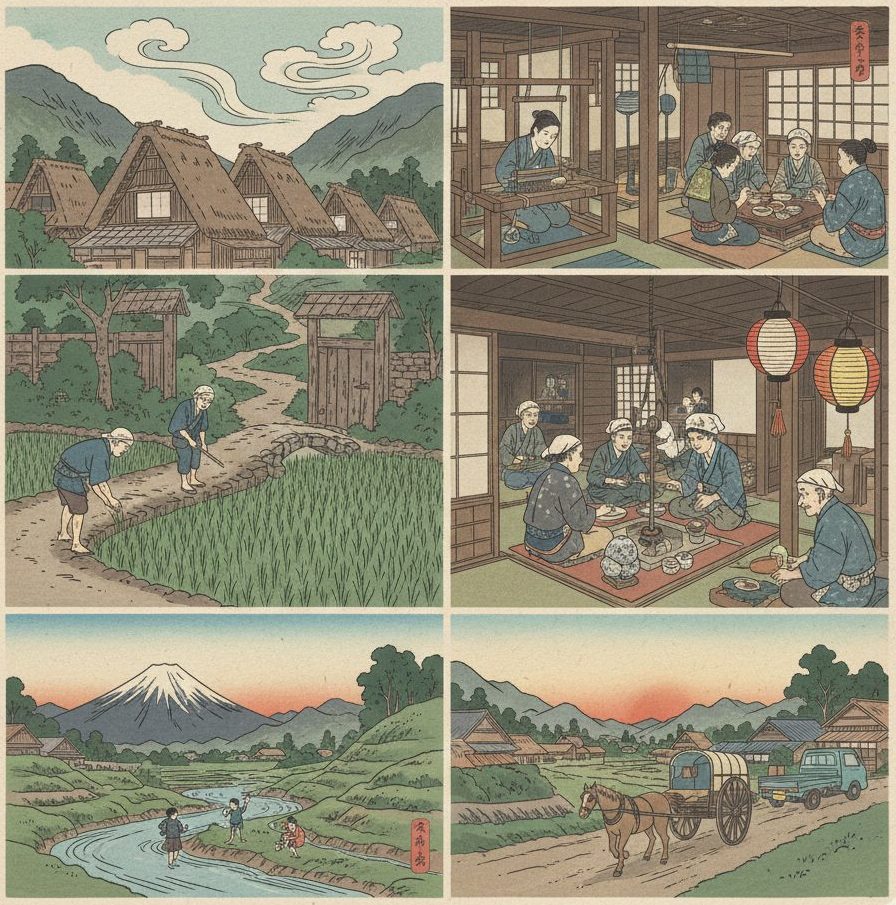
The Quiet Disappearance of Japan’s Villages
Scattered across Japan’s mountains and valleys are countless villages that once thrived with daily life and laughter.
Today, many of them stand silent. As younger generations move to cities and rural populations decline, these villages slowly vanish from the map—physically and culturally.
What remains, however, is a glimpse into a way of life built on harmony with nature and the passage of time.

1. Living in Harmony with Nature
Life in Japan’s traditional villages has always been deeply connected to the natural world.
People drew water from mountain streams, cultivated rice in the rhythm of the seasons, and gathered food from forests.
These weren’t merely survival practices—they reflected a philosophy of living with nature, not against it.
In a modern age where convenience dominates, the village lifestyle reminds us that humans are still a part of nature’s cycle.
2. The Culture of Mutual Support
Small villages often relied on close-knit communities where everyone helped one another.
From farming and house repairs to seasonal celebrations, cooperation was essential.
This system of mutual aid, often known in Japanese as “yui”, created a bond that went beyond friendship—it was a way of life.
In contrast to the individualism of modern cities, these villages nurtured a quiet sense of belonging and shared responsibility.
3. Seasonal Rhythms and Local Traditions
The flow of time in rural Japan has always been guided by the seasons.
From spring planting rituals to autumn harvest festivals and winter fire ceremonies, every event reflected gratitude toward nature.
These traditions gave rhythm to life and brought the community together, turning the changing seasons into shared memories.
They weren’t just cultural customs—they were emotional anchors that helped people feel connected to something greater than themselves.
4. Why Village Culture Is Being Rediscovered
In modern Japan, many people feel disconnected—rushed, isolated, and overwhelmed by urban life.
This has sparked a quiet revival of interest in rural living.
Remote work, community-based tourism, and small-scale relocation projects are helping people rediscover the peace and purpose found in simple, communal lifestyles.
The village, once seen as “left behind,” is now being reimagined as a model for sustainable living and mental well-being.
5. Lessons for Modern Life
Japan’s vanishing villages teach us a simple truth: knowing what is enough brings true contentment.
Living with less, valuing relationships, and staying connected to the land offer lessons that modern society urgently needs.
These are not outdated values—they’re timeless principles that remind us how to live with intention and gratitude.
Conclusion: To Remember Is to Preserve
Even as these villages fade, their spirit endures.
The quiet roads, weathered houses, and mountain paths tell stories worth preserving.
By documenting, photographing, and sharing them, we help keep the essence of Japan’s rural culture alive—for the next generation to learn from and cherish.
Summary
- Japan’s village culture represents harmony between people and nature.
- Cooperation and seasonal traditions are the heart of community life.
- Revisiting rural wisdom offers clues for a more balanced future.