

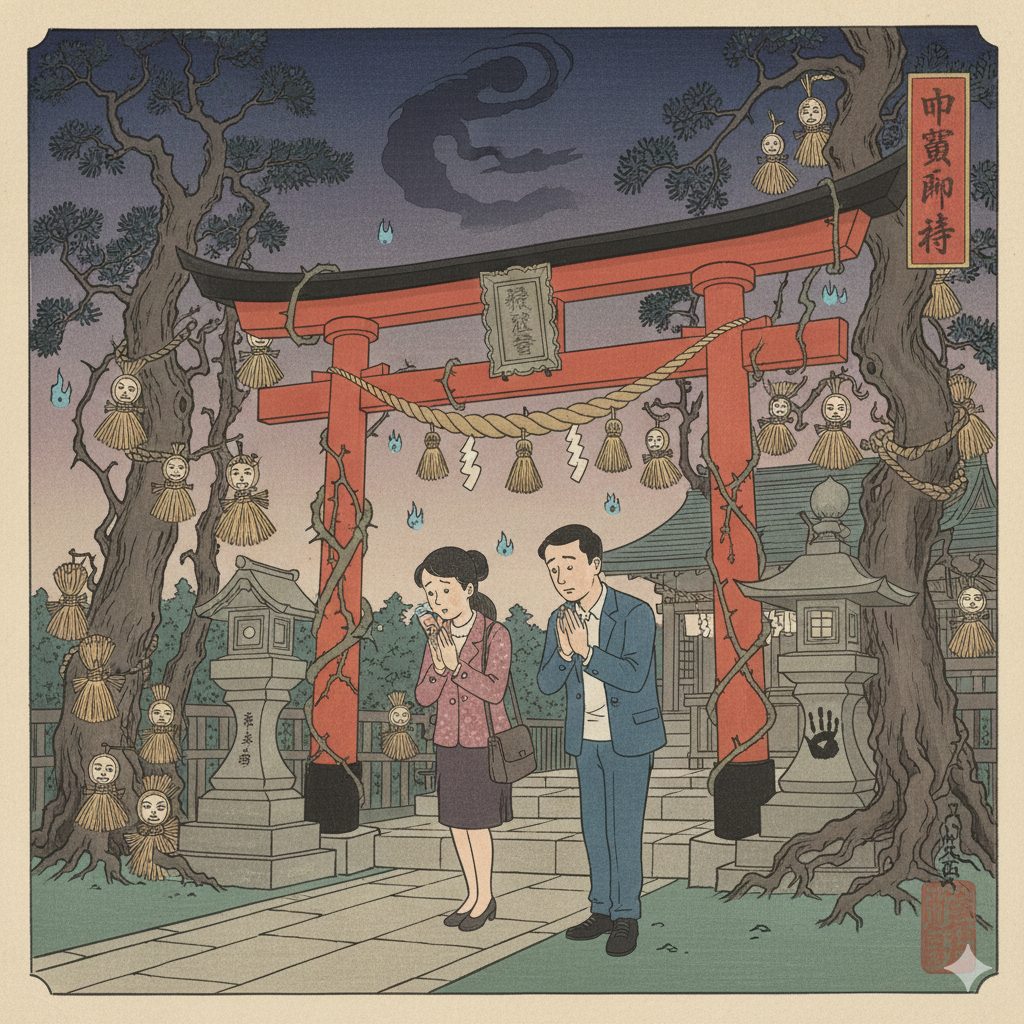
Visiting a Shinto shrine in Japan is a time-honored tradition that many people practice regularly. However, improper behavior—even when unintentional—can be seen as disrespectful, and in some beliefs, such actions are said to invite misfortune or “curses.”
This article offers a detailed guide to the correct way to visit a shrine, based on traditional customs and authoritative sources, while highlighting common mistakes and their meanings.
Basic Shrine Etiquette

1. Entering Through the Torii Gate
The torii gate marks the boundary between the secular and the sacred. It’s essential to approach it with mindfulness and respect:
- Bow Before Entering: Stop before the torii and bow slightly as a sign of respect before passing through.
- Avoid the Center Path: The center of the pathway is called the seichū, believed to be the route taken by the deity. Visitors should walk to the side to avoid impeding this sacred path.
2. Purification at the Chozuya (Water Basin)
Before approaching the shrine’s main hall, visitors should purify themselves at the Chozuya:
- Hold the ladle with your right hand and scoop water.
- Rinse your left hand.
- Switch hands and rinse your right hand.
- Pour water into your left hand and rinse your mouth (do not touch the ladle to your mouth directly).
- Rinse your left hand again.
- Rinse the ladle handle by tilting it upright and letting the water flow down.
3. Proper Worship Method at the Main Hall
Most shrines follow the “two bows, two claps, one bow” ritual (ni-rei, ni-hakushu, ichi-rei):
- Bow deeply twice.
- Clap your hands twice, with the right hand slightly lower than the left.
- Offer your prayer silently.
- Bow deeply once more to conclude.
Behaviors to Avoid and Their Meanings
1. Noise and Disruption in the Shrine Grounds
Shrines are sacred, peaceful places. Running, shouting, or behaving in a loud or playful manner is considered disrespectful, especially near the main sanctuary.
2. Taking Photos Without Consideration
Photography is often allowed, but with limitations:
- Check for Restrictions: Some areas, especially the honden (main sanctuary), may prohibit photography.
- Respect Others: Avoid disrupting other worshippers or blocking paths while taking pictures.
3. Touching Sacred Trees or Structures
Many shrines have shinboku (sacred trees) or historical buildings. Unless signs indicate permission, do not touch or lean on these items, as they are both spiritually and culturally significant.
Why Certain Actions Are Considered “Cursed”
Some shrine behaviors are said to bring misfortune due to longstanding beliefs in Shinto tradition.
1. Walking in the Center of the Path
As mentioned, the center path is reserved for the deity. Walking there is a symbolic act of disrespect, believed by some to lead to spiritual consequences.
2. Inappropriate Attire
Revealing or overly casual clothing can be viewed as irreverent in sacred spaces. Visitors are encouraged to dress modestly to show respect to the gods and the setting.
3. Throwing Coins into the Offering Box
The saisen (monetary offering) should be placed quietly, not thrown. Tossing money forcefully is considered aggressive and irreverent toward the deity.
How to Make the Most of Your Shrine Visit
1. Do Your Research
Learning about the specific shrine’s deity, history, and customs beforehand can deepen your understanding and enhance your experience.
2. Be Sincere in Your Prayers
Etiquette is important, but what matters even more is your heart. Approach the shrine with genuine gratitude and intent when offering your prayers.
3. Be Considerate of Others
Shrines are public spiritual spaces. Always be mindful of others who are praying or reflecting, and contribute to maintaining a calm, respectful atmosphere.
Conclusion
Shrines offer a space to reconnect with nature, find inner peace, and express gratitude. Understanding and practicing the proper etiquette not only shows respect to the sacred place but also enriches your own spiritual journey.
Each action—from the way you walk to how you bow—carries meaning. When done with intention, your visit becomes much more than a ritual; it becomes a chance for reflection and alignment with something greater.
Taking the time to revisit your shrine etiquette can help you avoid unconscious mistakes and foster deeper respect for Japanese culture and spirituality. By showing sincere reverence, you may also open yourself up to better fortune and deeper connections in your own life.
Let each visit to a shrine be an opportunity to purify your heart, refine your actions, and embrace moments of quiet humility.