

Introduction
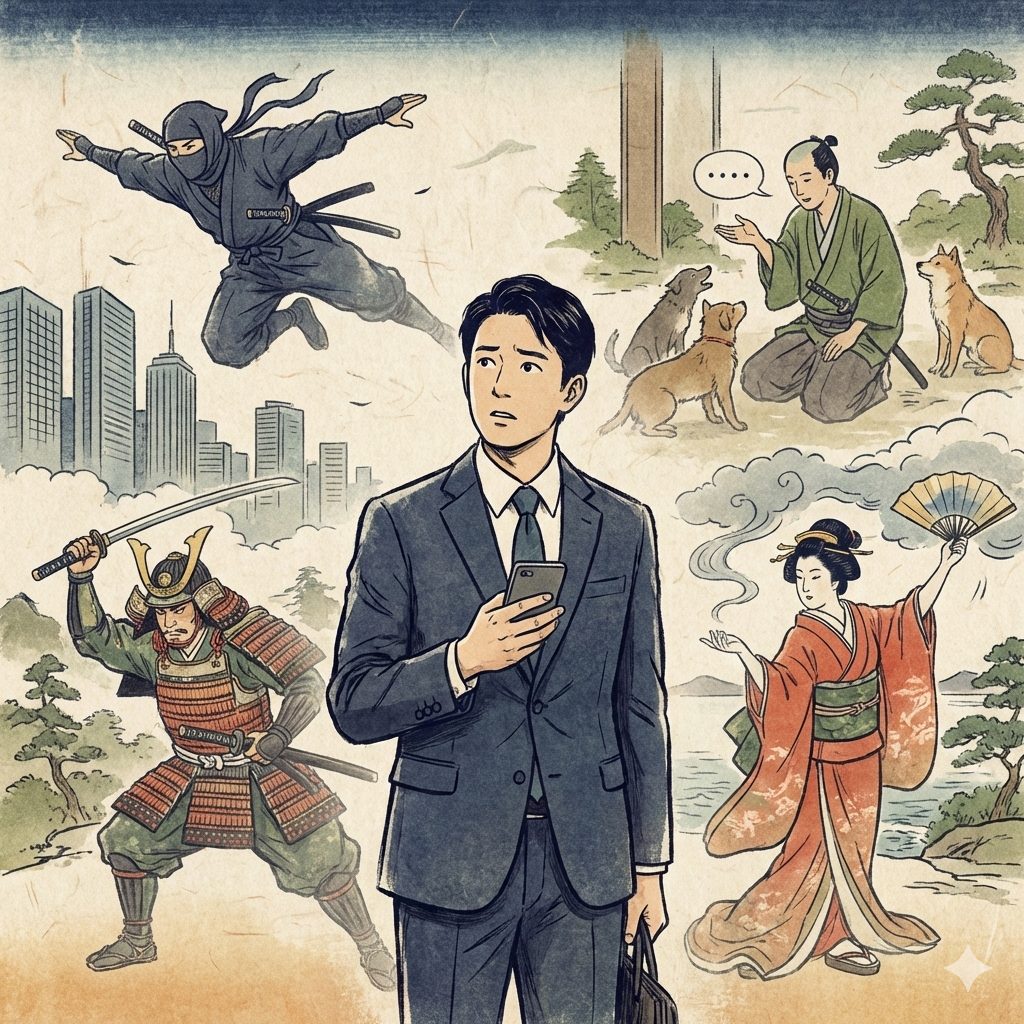
Modern convenience has brought comfort—but possibly at the cost of human potential. Historical records from the Edo to early Showa periods suggest that Japanese people once possessed extraordinary physical and mental abilities. From near-superhuman eyesight to cold resistance, these traits were not exclusive to elite warriors or monks, but found in ordinary citizens. This article explores five surprising human capabilities that were once common among Japanese people, backed by historical records and scientific sources.
1. Exceptional Eyesight in the Meiji Era
Evidence from Military Conscription Records
Military conscription tests in the late 19th century Meiji era revealed a significant number of young men—especially from rural areas—who had visual acuity equivalent to 2.0 or higher (approx. 20/10 vision in Western standards). These tests, though using a different system, still clearly recorded excellent long-distance vision.
Lifestyle Factors Behind Strong Eyesight
- Outdoor lifestyles: Farming and fishing required frequent long-distance focus.
- Minimal exposure to artificial light: Strengthened eye adaptability to natural darkness.
- Limited near-work: Few books, no screens—less strain on close-range vision.
Archery Training in the Edo Period
Edo-period archery schools practiced “tōshiya,” where archers shot at targets over 120 meters away (about 393 feet), such as at Kyoto’s Sanjusangen-do temple. Accuracy at such distances would have required outstanding eyesight and focus.
2. Remarkable Memory and Recitation Skills
Learning Methods in Terakoya (Temple Schools)
In the Edo period, children commonly memorized all 100 poems of the “Hyakunin Isshu” or Confucian texts like the Analects in just a few days. Repetition, chanting, and group recitation were daily learning methods in temple schools.
Factors Contributing to Memory Strength
- Auditory-focused education: With limited printed materials, students relied on listening.
- Repetition and rhythm: Used patterns and cadence to facilitate memorization.
- Collaborative learning: Students often recited texts together in group settings.
Such rigorous auditory training enhanced their working memory and listening comprehension.
3. Barefoot Couriers Who Ran Over 100 km a Day
The Speed and Endurance of Edo-Era Hikyaku (Couriers)
Historical records describe Edo-period couriers running over 100 kilometers per day while carrying official documents or valuables. These were not athletes—they were regular workers trained by daily necessity.
Endurance Supported by Simple Habits
- High-carb diets: Rice and grains provided long-lasting energy.
- Minimal footwear: Running in straw sandals (waraji) or barefoot improved stride efficiency.
- Relay system: Multiple runners covered long distances in shifts, sustaining performance.
These couriers functioned like a living postal service, operating long before cars or trains.
4. High Cold Tolerance Without Heating
Living Barefoot in Winter
Until the early Showa era, many Japanese homes had no heating beyond a charcoal brazier. It was common for children to play barefoot in the snow or attend school in short sleeves. Folk records and early 20th-century photographs document these scenes clearly.
Biological and Cultural Cold Adaptation
- Increased brown fat activity: Cold exposure stimulated thermogenesis.
- Efficient blood flow regulation: Helped conserve body heat.
- Cultural acclimation: Cold-water washing and winter training (kangeiko) were normalized.
Rather than relying on technology, people adapted physiologically and behaviorally to cold.
5. Ordinary People With Extraordinary Potential
The abilities listed above were not reserved for the elite or genetically gifted. They were cultivated through environment, routine, and necessity. Common threads include:
- Heavy reliance on the natural environment
- Physically demanding daily life
- Minimalist housing, clothing, and tools
Today’s urban, climate-controlled, and sedentary lifestyle offers few of the conditions that allowed these capabilities to flourish. While we enjoy unprecedented convenience, the human body may have sacrificed potential that was once nurtured by necessity.
Conclusion
Exceptional eyesight, the ability to memorize poetry in days, running 100 kilometers barefoot, and thriving in the cold—these were once ordinary traits among Japanese people. They reveal how much the human body can achieve when shaped by its environment and lifestyle.
Although modern life rarely demands these abilities, they remind us that our potential is far greater than we often assume. By adjusting our habits—spending more time outdoors, using our bodies more actively, and embracing discomfort occasionally—we might reconnect with abilities long thought lost.
The past holds powerful lessons. And perhaps, within those lessons, lies a path to rediscovering what it truly means to be human.