

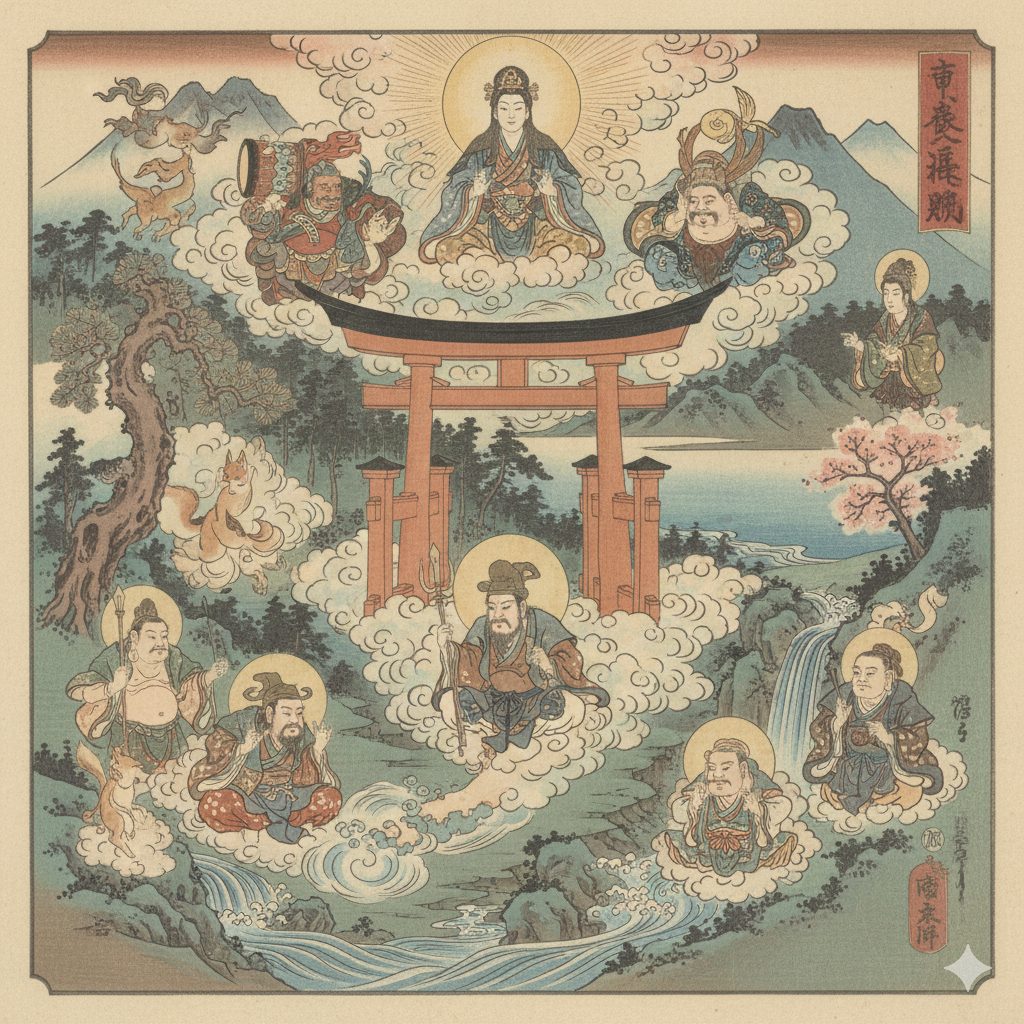
The Japanese spiritual landscape is rich and complex, characterized by a distinctive polytheistic tradition known as Shinto. Central to Shinto belief is the concept of “eight million gods,” often translated as “eight million gods. This term symbolizes the myriad deities that inhabit all aspects of the natural and spiritual world. This lecture will delve into the origins, significance, and contemporary relevance of this concept and provide a comprehensive understanding of its role in Japanese culture.
Origins of “Yaoyorozu no Kami”
The term “Yaoyorozu” combines “yao,” meaning “eight hundred,” and “yorozu,” meaning “ten thousand,” collectively signifying an innumerable multitude. In ancient Japan, large numbers were often expressed poetically, and “eight million” came to represent an infinite number. Thus, “Yaoyorozu no Kami” refers not to a specific count but to the boundless number of deities recognized in Shinto belief.
Shinto’s Polytheistic Framework
Shinto, Japan’s indigenous religion, is inherently polytheistic, acknowledging a vast array of kami (deities or spirits). These kami are believed to inhabit natural phenomena, objects, and even concepts. From mountains and rivers to tools and emotions, virtually every element of existence can be associated with a kami. This belief system fosters a deep respect for nature and the interconnectedness of all things.
Kami in Nature and Everyday Life
In Shinto, nature is revered as sacred, with each natural feature considered the dwelling place of a kami. Mount Fuji, for instance, is venerated as a deity, and countless shrines are dedicated to various natural elements across Japan. Beyond nature, everyday objects and activities are also associated with specific kami. For example, there are deities for agriculture, commerce, and even specific tools, reflecting the belief that all aspects of life are imbued with spiritual significance.
Historical Development of the Concept
The concept of “Yaoyorozu no Kami” has evolved over centuries, influenced by various cultural and religious developments. Early Japanese texts, such as the “Kojiki” and “Nihon Shoki,” document numerous deities and mythological narratives, laying the foundation for Shinto beliefs. Over time, the integration of Buddhism introduced new deities and concepts, further expanding the pantheon. This syncretism led to a rich tapestry of beliefs, where native and foreign elements coexisted harmoniously.
Syncretism with Buddhism
The arrival of Buddhism in Japan during the 6th century brought significant changes to the religious landscape. Rather than displacing Shinto beliefs, Buddhism was integrated, leading to a syncretic tradition known as Shinbutsu-shūgō. In this framework, kami were often equated with Buddhist deities, and many shrines and temples housed both Shinto and Buddhist elements. This blending of traditions enriched the concept of “Yaoyorozu no Kami,” incorporating a diverse array of spiritual beings.
Contemporary Relevance
Today, the concept of “Yaoyorozu no Kami” continues to influence Japanese culture and spirituality. Shinto practices remain integral to various life events, from birth and marriage to festivals and rituals. The reverence for nature and the belief in the spiritual essence of all things foster environmental awareness and a sense of harmony with the world. Moreover, the inclusive nature of Shinto allows for the coexistence of multiple beliefs, reflecting Japan’s cultural adaptability.
Conclusion
The concept of “Yaoyorozu no Kami” encapsulates the essence of Shinto’s polytheistic and animistic worldview. By recognizing the divine in all aspects of existence, it fosters a profound respect for nature, objects, and experiences. This belief system has shaped Japanese culture for centuries, promoting values of harmony, reverence, and interconnectedness. As Japan continues to navigate the modern world, the enduring legacy of “Yaoyorozu no Kami” offers valuable insights into the nation’s spiritual and cultural identity.