

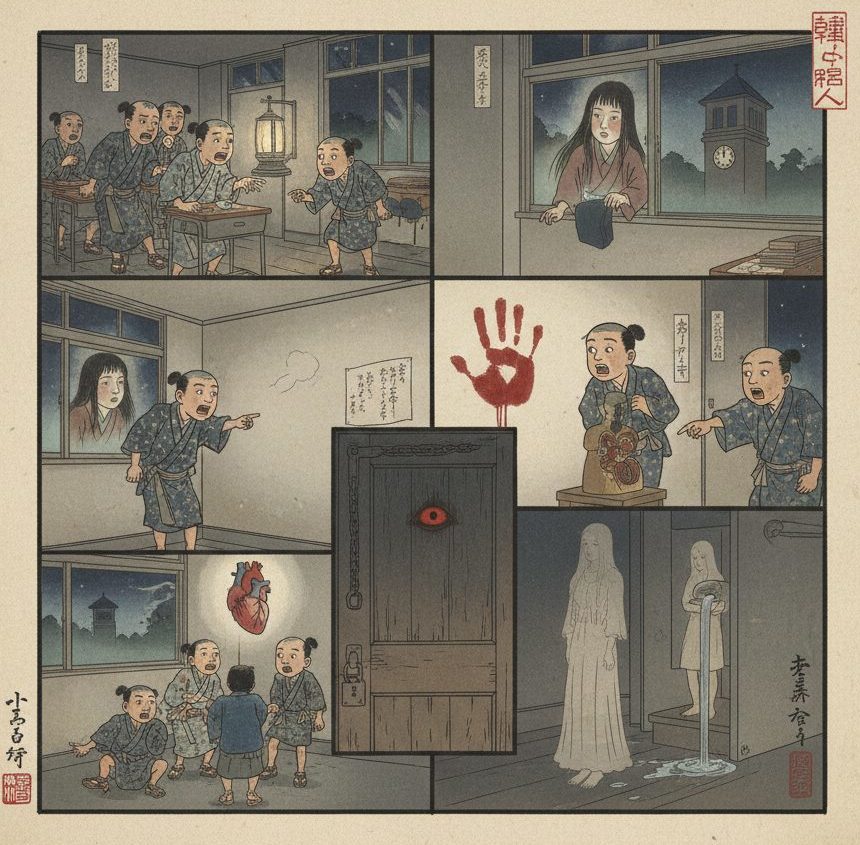
In Japan, many schools share a set of eerie tales known as the “Seven School Mysteries” (学校の七不思議, Gakkō no Nana Fushigi). These stories, often passed down through generations of students, include legends like Hanako-san in the restroom, moving portraits in the music room, and anatomical models that come to life at night. Despite variations, the core themes remain strikingly similar across different regions. This article delves into these shared legends, exploring their origins, reasons for their widespread nature, and their significance in Japanese culture.
What Are the Seven School Mysteries?
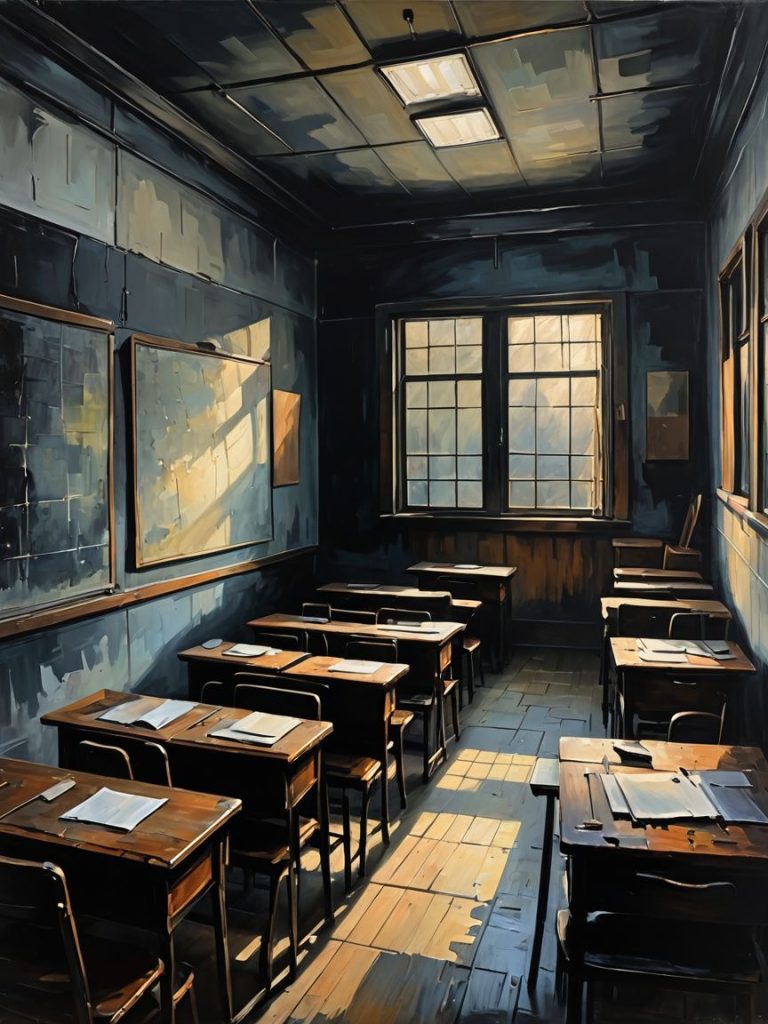
The “Seven School Mysteries” refer to a collection of supernatural tales commonly told in Japanese schools. While the specific stories can vary, they typically involve ghostly apparitions, haunted rooms, or unexplained phenomena within the school premises. These tales serve as a rite of passage for students, fostering a shared cultural experience.
Common Examples of School Mysteries
Hanako-san of the Toilet
Perhaps the most famous of these legends is Hanako-san, a spirit said to haunt the third stall of the girls’ restroom. According to various accounts, Hanako-san is the ghost of a young girl who met a tragic end, with stories dating back to the 1950s. Her tale gained widespread popularity in the 1980s and 1990s, becoming a staple in Japanese school folklore
The Moving Portrait in the Music Room
Another prevalent story involves a portrait in the music room, often of a classical composer, whose eyes are said to follow students as they move. This phenomenon is typically attributed to optical illusions but continues to captivate the imaginations of students.
The Anatomical Model That Comes to Life
In many schools, there’s a legend about an anatomical model in the science lab that moves or comes to life after hours. This tale plays on the uncanny appearance of these models and the eerie atmosphere of empty classrooms.
The Staircase with an Extra Step
Some schools have stories about staircases that have an extra step when ascending but not when descending, or vice versa. This anomaly is often linked to supernatural causes in the legends.
The Moving Statue of Ninomiya Sontoku
Statues of Ninomiya Sontoku, a prominent historical figure, are common in Japanese schools. Legends claim that these statues move or change positions at night, adding to the school’s mysterious aura.
Why Are These Mysteries So Widespread?
Standardized School Architecture
Japanese schools often share similar architectural designs, including features like music rooms, science labs, and restrooms. This uniformity provides a common backdrop for these legends to emerge and spread.
Cultural Transmission Through Media
The proliferation of these stories has been aided by their inclusion in books, television shows, and movies. For instance, the 1990 publication of a book introducing Hanako-san and other characters helped cement these tales in popular culture
Oral Tradition Among Students
Students play a crucial role in perpetuating these legends. Through storytelling, each generation adds its own variations, ensuring the tales’ survival and relevance.
The Role of School Mysteries in Japanese Culture
Fostering Community and Shared Identity
These stories create a sense of community among students, offering shared experiences and topics of conversation.
Encouraging Creativity and Imagination
Engaging with these tales allows students to explore their creativity, as they imagine scenarios and even create their own versions of the stories.
Preserving Cultural Heritage
The Seven School Mysteries are part of Japan’s rich tapestry of folklore, reflecting societal values and fears. They serve as a means of preserving cultural narratives and traditions.
Conclusion
The Seven School Mysteries are more than just spooky tales; they are integral to the cultural fabric of Japanese schools. Their widespread presence can be attributed to standardized school designs, media influence, and the oral traditions of students. These stories not only entertain but also foster community, encourage creativity, and preserve cultural heritage. As such, they continue to be a fascinating aspect of Japan’s educational and cultural landscape.