

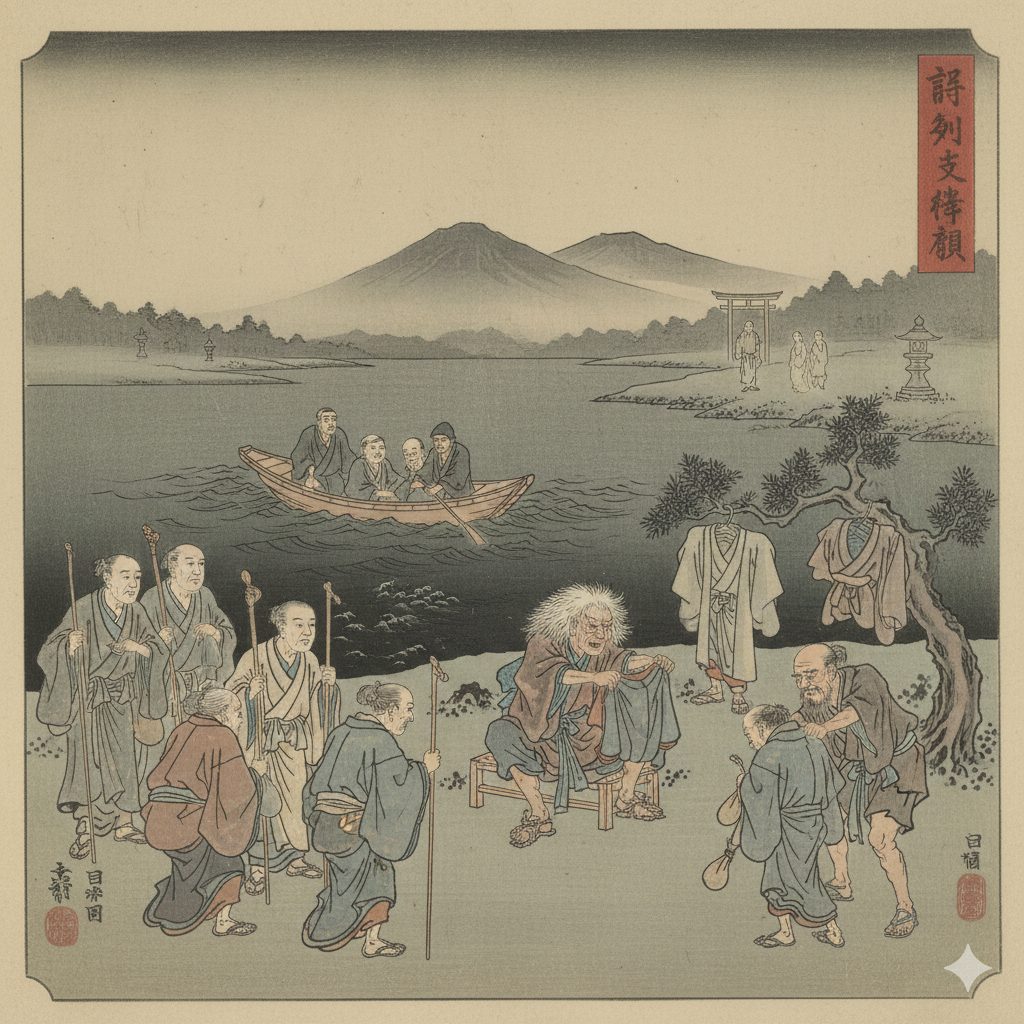
The Sanzu River is a symbolic river in Japanese Buddhist tradition that souls must cross on their way from this world to the afterlife. Deeply embedded in folklore and religious practices, this river reflects a unique Japanese view of death and moral judgment.
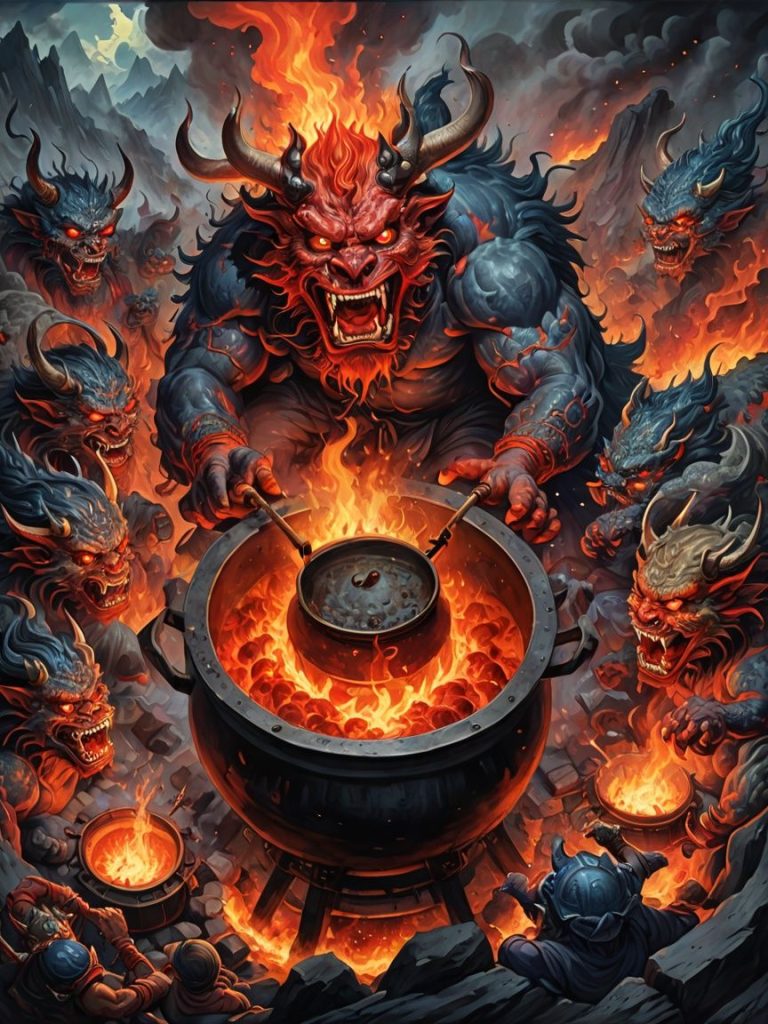
Meaning and Origin of the Sanzu River
The term “Sanzu” refers to the “Three Paths” (good, neutral, evil), echoing Buddhist teachings on moral outcomes. Depending on a person’s actions in life, they are said to cross the river in one of three ways:
- A bridge for the virtuous
- A shallow ford for the average
- A raging current for the wicked
This notion comes from texts such as the Shōbōnenjokyō (正法念処経) and has merged with Japanese folklore.
Real-World Locations
There are physical locations in Japan associated with the Sanzu River, most famously Mount Osore (恐山) in Aomori Prefecture. Considered one of Japan’s three sacred mountains, it is thought to be near the boundary of the spirit world.
The Role of Children and the “Sai no Kawara”
A related concept is Sai no Kawara, a riverbank where children who died young stack stones to pray for their parents. Their towers are destroyed by demons, symbolizing karmic burden. However, Jizō Bosatsu, a beloved Buddhist figure, is believed to save them—offering comfort to grieving parents.
The Six Coins (Rokumonsen)
Funeral rites often include placing six coins with the deceased. These are meant to pay the ferryman who guides the soul across the Sanzu River. The number six is significant as it relates to Buddhist cosmology (the six realms of rebirth).
The River as a Moral Metaphor
The Sanzu River is not synonymous with hell. It precedes the judgment that determines one’s rebirth among the six Buddhist realms: hell, hungry ghost, animal, asura (warring), human, or heavenly.
It functions as a symbolic mirror, reflecting the ethical weight of one’s life.
Modern Interpretations
Even today, references to “seeing the Sanzu River” are used metaphorically in Japan to mean a near-death experience. Terminal patients have described visions of a river, tying into deeply rooted cultural beliefs.
Conclusion
The Sanzu River represents a profound fusion of Buddhist doctrine, Shinto elements, and folk beliefs. It serves as both a literal and metaphorical crossing—judging the soul, reminding the living of their deeds, and offering insight into how Japanese culture views death not as an end, but as a transition shaped by karma and compassion.
Understanding the Sanzu River is to understand a vital part of Japan’s spiritual heritage—one that continues to influence how people reflect on life, death, and what lies beyond.