

Introduction
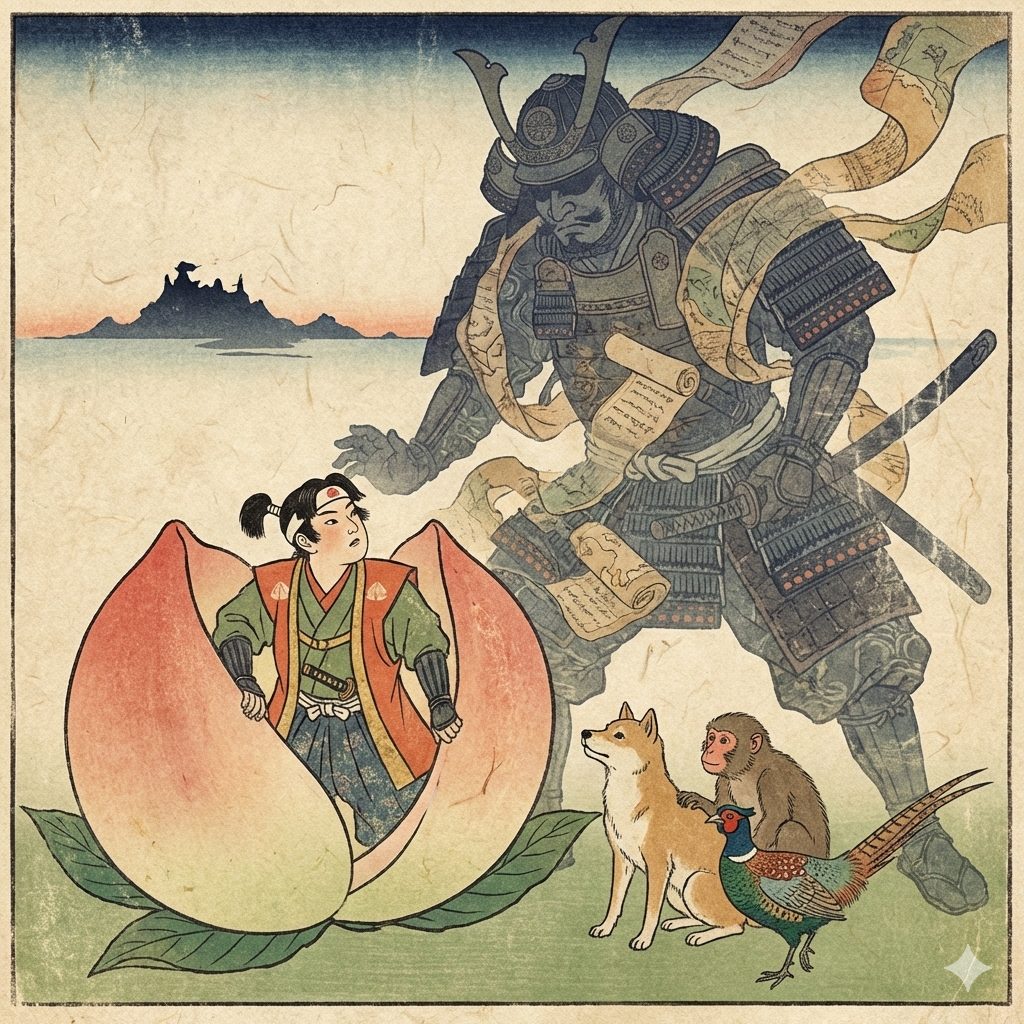
Momotaro, or “Peach Boy,” is one of Japan’s most famous and beloved folklore characters.
Known for being born from a peach and defeating ogres with the help of loyal animal companions, Momotaro symbolizes courage, loyalty, and justice.
However, few people know that there might be a real historical figure who inspired this legendary hero.
In this article, we dive deep into the potential origins of Momotaro, linking legend to history with credible sources and new insights.
The Legend of Momotaro
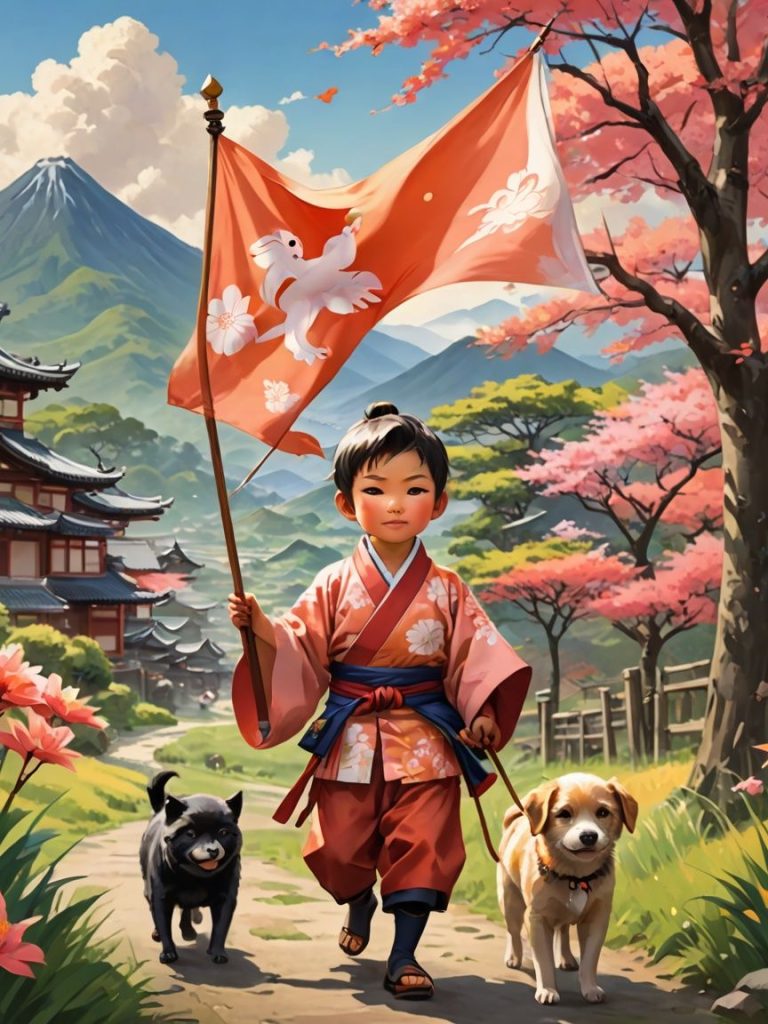
The story of Momotaro is familiar to many.
An elderly couple discovers a giant peach floating down a river.
When they open it, they find a healthy boy inside, whom they name Momotaro.
As he grows up, Momotaro sets out on a journey to defeat a band of ogres (oni) on a distant island, taking along a dog, a monkey, and a pheasant as companions.
With teamwork and bravery, they succeed in overcoming the evil beings and bringing back their treasure.
The tale is simple yet profound, filled with cultural values such as filial piety, cooperation, and bravery.
But who exactly was Momotaro modeled after?
The Historical Figure Behind Momotaro
Recent research points to a surprising candidate: Kibitsuhiko-no-Mikoto, a legendary figure from ancient Japan.
Kibitsuhiko-no-Mikoto is mentioned in historical chronicles such as the Kojiki (Records of Ancient Matters) and the Nihon Shoki (Chronicles of Japan).
He was a prince of the Kibi region (present-day Okayama Prefecture) and was known for his battle against an ogre-like adversary named Ura.
According to these records, Ura was the ruler of a rival kingdom and was described as a demon or an evil spirit, paralleling the ogres Momotaro fights.
Kibitsuhiko-no-Mikoto’s victory over Ura closely mirrors Momotaro’s battle against the oni.
Why Kibitsuhiko-no-Mikoto Is Seen as Momotaro’s Prototype
Several points strengthen the theory that Kibitsuhiko-no-Mikoto inspired Momotaro:
- Geographical Connection: Okayama Prefecture, traditionally associated with Momotaro, is where Kibitsuhiko-no-Mikoto’s legend is strongest.
- Battle Against Demons: The enemy, Ura, is portrayed as a monstrous, demon-like figure, much like the ogres Momotaro battles.
- Name Associations: The names “Kibi” and “Kibitsuhiko” are directly tied to the Kibi region, which is the setting for many Momotaro-related landmarks today.
These connections suggest that the Momotaro story evolved from an earlier myth about a real historical figure’s triumph over a rival kingdom.
The Peach Motif and Its Cultural Meaning
One notable difference between Kibitsuhiko-no-Mikoto and Momotaro is the peach birth story.
Why was the peach added?
In ancient Japan, peaches symbolized warding off evil and bringing good luck.
This symbolism likely merged with the older story to create a more magical and morally powerful narrative.
The inclusion of the peach was not random—it enhanced Momotaro’s role as a divine or fated hero, destined to bring peace and prosperity.
Evolution of the Momotaro Legend
The earliest written versions of the Momotaro story appeared during the Edo period (1603–1868).
During this time, Japan enjoyed relative peace under the Tokugawa shogunate, and popular literature blossomed.
Momotaro’s story became a children’s tale, emphasizing virtues like courage, filial piety, and teamwork.
It was often used in educational materials to instill these values.
In the Meiji era (1868–1912), Momotaro became even more symbolic, used to promote patriotism and national pride, especially during times of war.
Modern Adaptations and Cultural Impact
Today, Momotaro continues to inspire countless adaptations in literature, film, anime, and even video games.
From educational picture books to pop culture icons, the story of the peach-born hero remains vibrant and relevant.
Okayama, the supposed homeland of Momotaro, also celebrates the legend through monuments, festivals, and tourism campaigns.
Visitors can find statues of Momotaro and themed souvenirs throughout the region.
Conclusion
The legend of Momotaro, while fantastical, appears to be rooted in the real-life exploits of Kibitsuhiko-no-Mikoto.
By merging history, myth, and cultural symbolism, the story evolved into the beloved folk tale known today.
Understanding Momotaro’s historical background enriches our appreciation of this iconic figure and highlights the deep intertwining of myth and reality in Japanese culture.
As we continue to retell and reinterpret Momotaro’s adventures, we honor a tradition that connects the past, present, and future of Japan.