

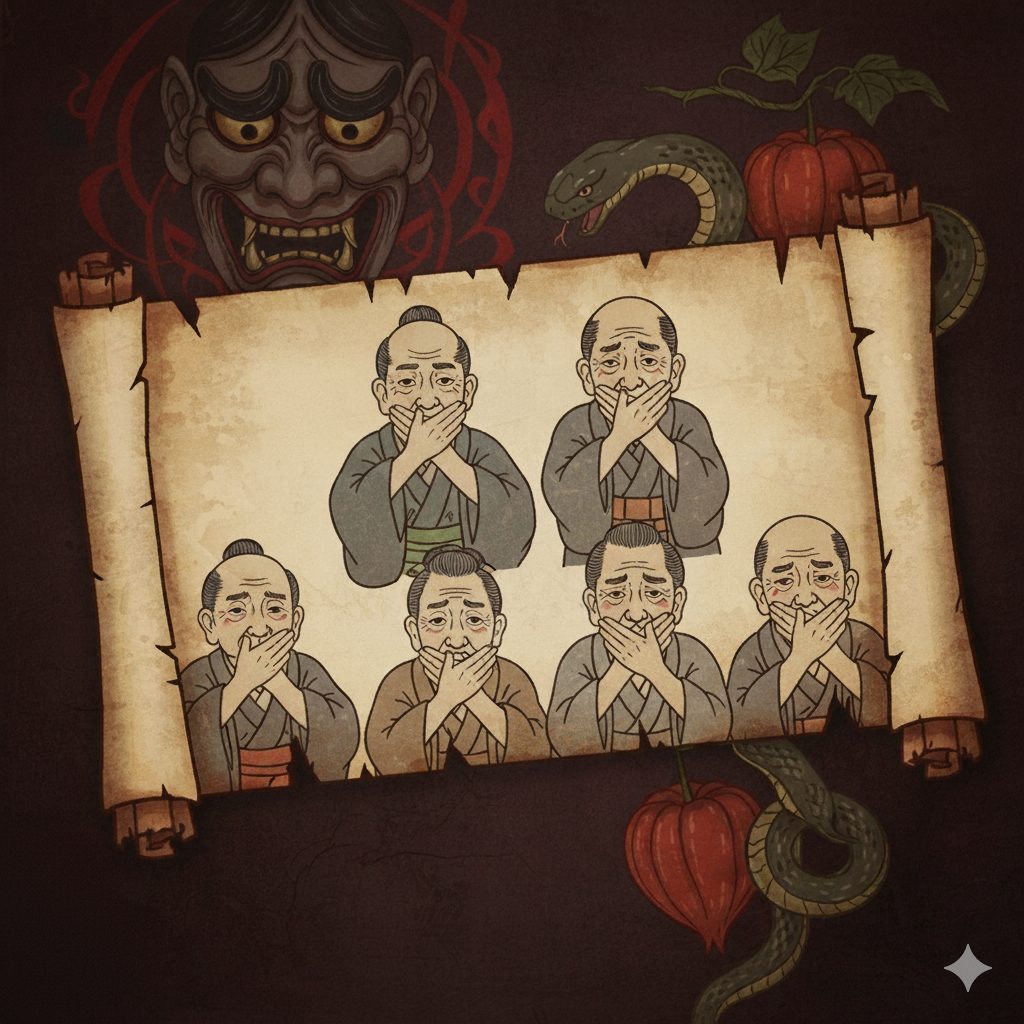
In Japan, words are believed to carry spiritual power—a concept known as kotodama.
Behind common proverbs and expressions lie warnings, fears, and deep cultural wisdom.
This article explores the mysterious side of the Japanese language—where words can bless or curse, protect or harm.
Why the Japanese Feared Words
In Japanese culture, words have long been seen as living things—carriers of spiritual energy.
This ancient belief, called kotodama (言霊), teaches that spoken words can shape reality.
Good words invite good fortune, while careless or negative ones can bring misfortune.
Even today, traces of this belief remain in how Japanese people choose their words carefully, especially in times of celebration, mourning, or transition.
1. Avoiding Words About Death or Separation
From ancient times, words related to death or parting were considered taboo, especially during festive occasions.
It was believed that simply mentioning misfortune could attract it.
To avoid this, the Japanese developed gentle alternatives:
- Instead of “to die” (shinu), people say “to pass away” (nakunaru).
- Instead of “to cut” (kiru), they use “to tie” (musubu) or “to continue” (tsuzuku).
This linguistic softness reflects more than politeness—it’s a spiritual act of warding off bad luck through careful speech.
2. The Deeper Meaning of “Warau Kado ni wa Fuku Kitaru”
The well-known proverb “Warau kado ni wa fuku kitaru” (“Good fortune comes to those who smile”) sounds cheerful and simple.
But historically, “laughter” had a ritual meaning.
In ancient villages, laughter was a sacred act—a way to appease the gods and repel misfortune.
Thus, the saying originally meant “A home that can laugh in the face of fear invites blessings.”
It’s not just optimism—it’s courage disguised as cheerfulness.
3. “The Mouth Is the Source of Disaster”
The proverb “Kuchi wa wazawai no moto” (“The mouth is the source of disaster”) is still common today, but in the past, it was taken literally.
In eras of strict hierarchy and surveillance, a careless word could lead to punishment—or worse.
Speech was power, and silence was safety.
That’s why restraint in speaking became a mark of intelligence and grace in Japanese culture.
4. “The Lazy Man Who Slept for Three Years”
The folk story of San-nen Netarō (“The man who slept for three years”) seems to condemn laziness.
Yet, the deeper message is the opposite: those who wait for the right moment will succeed.
Japanese sayings often carry both a surface meaning and a hidden truth.
Even “quiet” or “humble” can mean “thoughtful” and “wise.”
Understanding these layers reveals a mindset that values patience and harmony over haste.
5. The Power of the Spoken Word
In traditional Japan, speaking was seen as an act of creation.
This idea is reflected in religious chants, prayers, and even everyday greetings.
Interestingly, the word “to breathe out” (haku) becomes “to fulfill” (kanau) when you remove the negative element (the radical meaning “to lack”).
In other words: when we remove negativity from our speech, our words can make wishes come true.
Conclusion: The Beauty of Restraint
Today, words flow freely across social media, often without reflection.
But ancient Japanese culture reminds us: every word carries weight.
A word can comfort or wound, bless or curse.
To speak mindfully is not suppression—it’s elegance.
And perhaps that’s the secret to why the Japanese language has endured with such quiet power.
Summary
- Japanese people believed in kotodama: the spiritual energy of words.
- Many sayings hide warnings or deeper truths about fear, patience, and respect.
- Speaking carefully was once a way to protect oneself and maintain harmony.